I don’t always just buy shares of stock.
I get paid to buy them lower, while getting paid interest on the cash in account. And when I own them, I rent them out for income.
Thanks for reading! Subscribe for free to receive new posts and support my work.
That’s the wheel strategy. It’s one of my favorite ways to generate consistent income from stocks I already want to own. And you don’t need a massive account to do it.
Let me break it down.
What Is the Wheel Strategy?
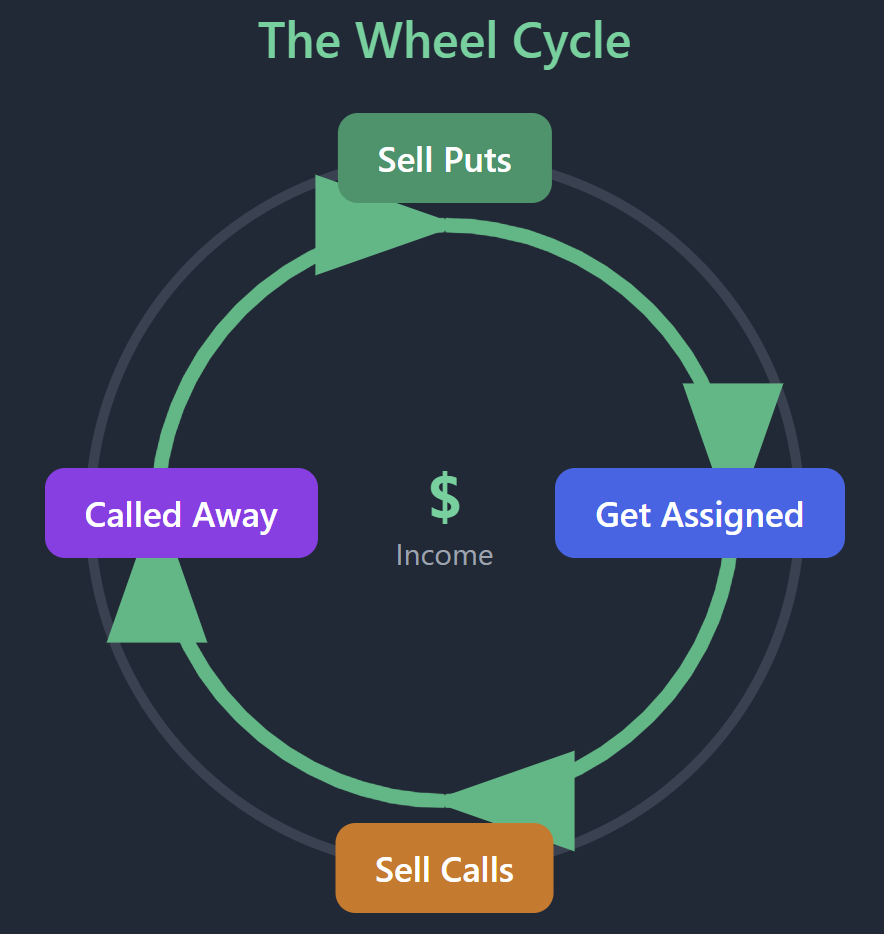
The wheel has two parts:
- Sell puts – Get paid to agree to buy a stock at a lower price
- Sell covered calls – If you get assigned shares, rent them out for more income
When your shares get called away, you start selling puts again. Round and round it goes.
Simple. Repeatable. Math-based.
Why I Like the Wheel
Most people buy 100 shares of a stock and hope it goes up.
That works. But you’re tying up all that capital from day one with full exposure.
With the wheel, you collect income before you own shares. And if the stock drops? You wanted to buy it anyway—now you’re getting it at a discount plus you keep the premium.
If the stock stays flat or goes up? You keep the premium and move on. No shares, no problem.
Sizing With Notional Value
Here’s how I think about position sizing.
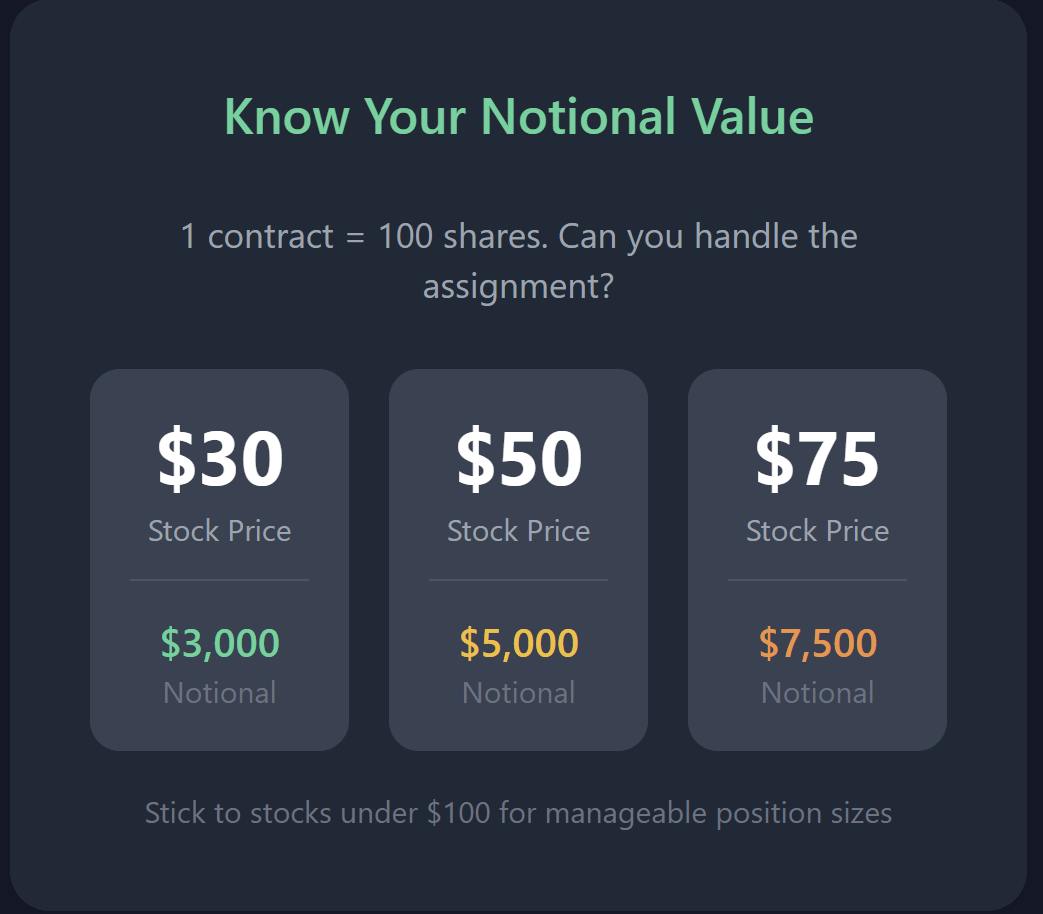
Say you’re looking at a $50 stock. One contract controls 100 shares, so the notional value is $5,000. That’s how much you’d need if you got assigned.
I stick to stocks under $100 for wheeling. A $30 stock? That’s $3,000 notional. A $75 stock? $7,500.
Know your notional value. Make sure you’re comfortable owning 100 shares at that strike if you get assigned. If you can’t handle the assignment, you shouldn’t be selling the put.
Picking Strikes With Moving Averages
I don’t guess at strikes. I use moving averages.
If you’ve read my post on the only indicator I keep on my charts, you know I rely on the 10, 20, and 50 EMAs for shorter-term moves and the 100 and 200 SMAs for the big picture.
When I’m selling puts, I look for strikes near key moving averages—places where price has bounced before. If I get assigned there, I’m buying at a level that has historically acted as support.
Same logic for covered calls. I sell calls near resistance levels or longer-term moving averages where I’d be happy to let shares go.
The averages tell me where to look. Price action tells me when to act.
Getting Assigned: Time to Rent Out Your Shares
If the stock drops through your strike and you get assigned, don’t panic.
You wanted to own this stock anyway. Now you do—and your cost basis is already lower because of the premium you collected.
Next step: sell covered calls.
This is where you “rent out” your shares. You collect premium for agreeing to sell at a higher price. If the stock goes up and you get called away, you made money on the shares and kept all the premium.
I have a whole covered call mini-series on YouTube that walks through this step by step.
Called Away? Back to Puts
When your shares get called away, you’re back to cash.
Start selling puts again. Collect premium. Wait for another opportunity to buy at a lower price.
That’s the wheel. Puts → shares → calls → called away → puts again.
The SGOV Bonus
Here’s something most people miss.
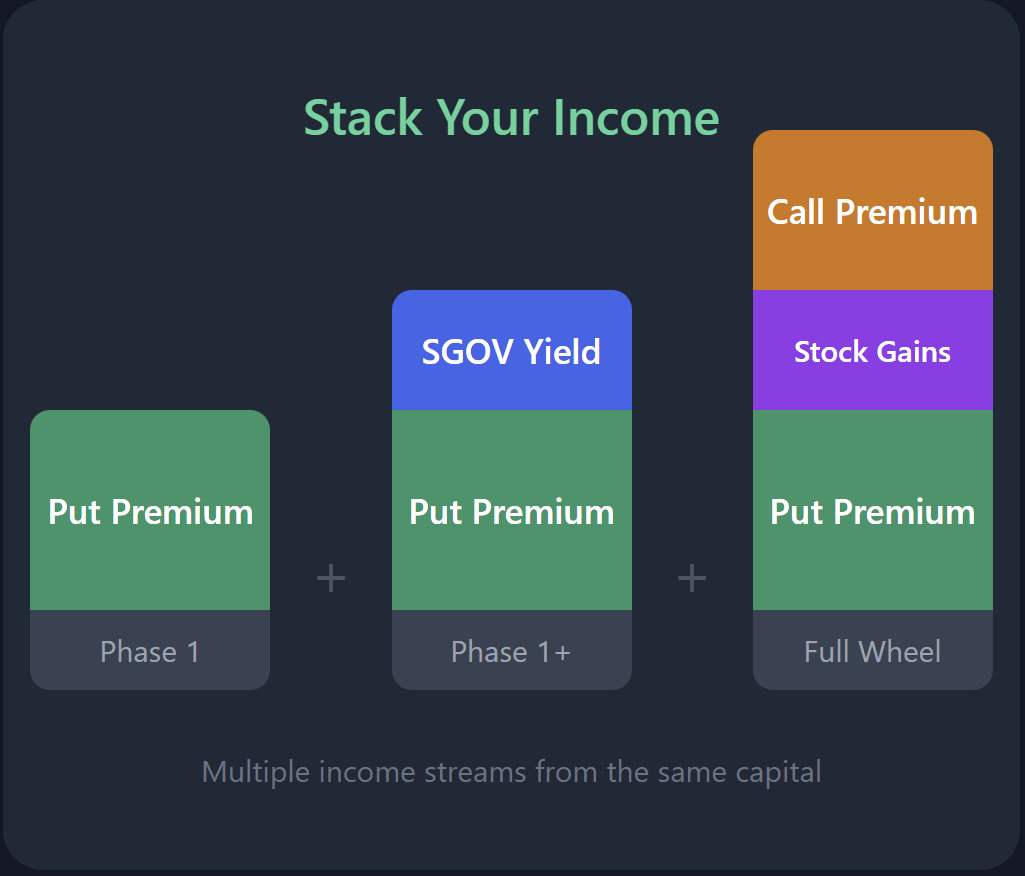
When you’re in the “selling puts” phase, your cash is sitting there waiting. In a higher interest rate environment, park that cash in something like SGOV (a short-term Treasury ETF) and earn interest while you wait.
You’re generating income from your options and earning yield on your cash.
Two income streams from the same capital. That’s efficiency.
The Honest Trade-Offs
The wheel isn’t perfect. Nothing is.
- You might miss big runs. If the stock rips higher while you’re waiting to get assigned, you won’t capture all those gains.
- You cap your upside with calls. That’s the trade for getting paid premium. If the stock price blows past the strike of your covered call, you are losing you shares at the covered call.
- It takes some management. This isn’t set-and-forget.
But if you want consistent income from stocks you’d own anyway? The wheel is hard to beat.
The Simple Version
- Find a stock under $100 you want to own. Check the notional value.
- Sell a put at a strike near a key moving average. Collect premium.
- If assigned, sell covered calls above your cost basis. Collect more premium.
- If called away, start over with puts.
- Park your cash in SGOV while you’re between positions.
That’s it. No predictions. No hoping. Just a system.
Bottom Line
The wheel strategy is how I get paid to buy stocks lower and rent out my shares for income.
It’s math over emotion. Probability over prediction. And it works best when you keep it simple.
If you want to learn more about how I pick strikes and read charts, check out my post on moving averages. And if you want the full breakdown on selling covered calls, my YouTube series has you covered.
Simple beats sexy. Every time.
Turning knowledge into wealth,
$Maxwell
This is for educational purposes only. I’m not a financial advisor—just a trader who’s been doing this for nearly 30 years. You’re responsible for your own decisions and the buttons you click in your brokerage account.
Thanks for reading! Subscribe for free to receive new posts and support my work.