I talk a lot about individual stocks. Today I’m sharing how I use sector SPDR ETFs—and why they’ve made me a lot of money over the years.
This is a longer post. But I’m giving you information that others charge thousands for, and I’m keeping it simple.
What Are Sector SPDRs?
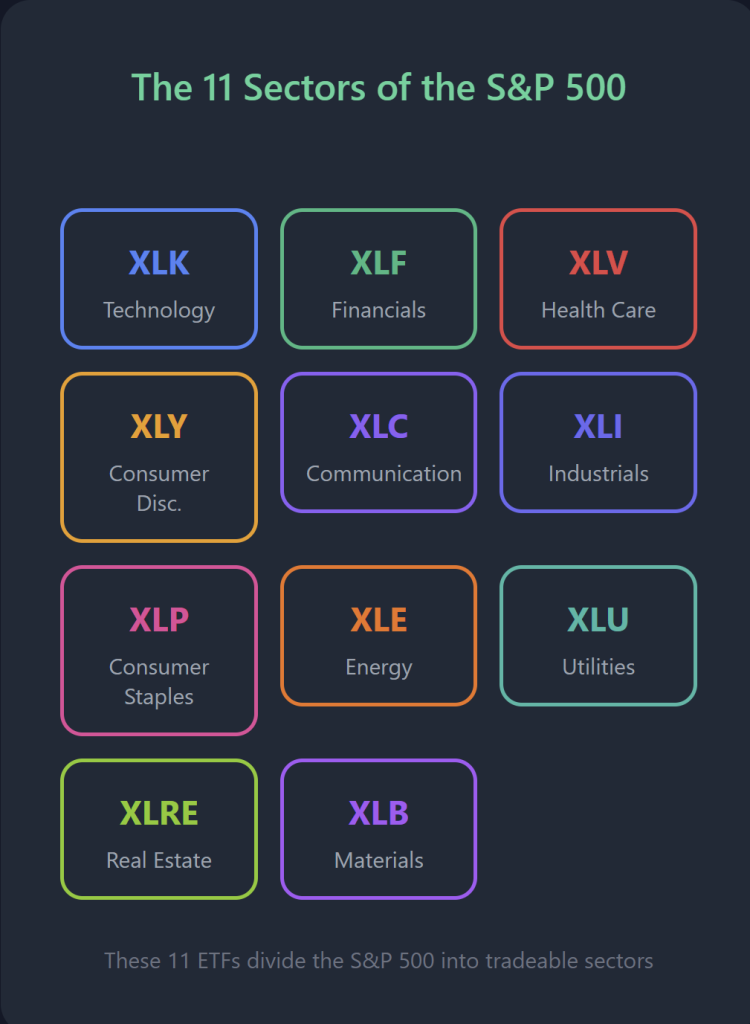
The S&P 500 is divided into 11 sectors. Each sector has its own ETF:
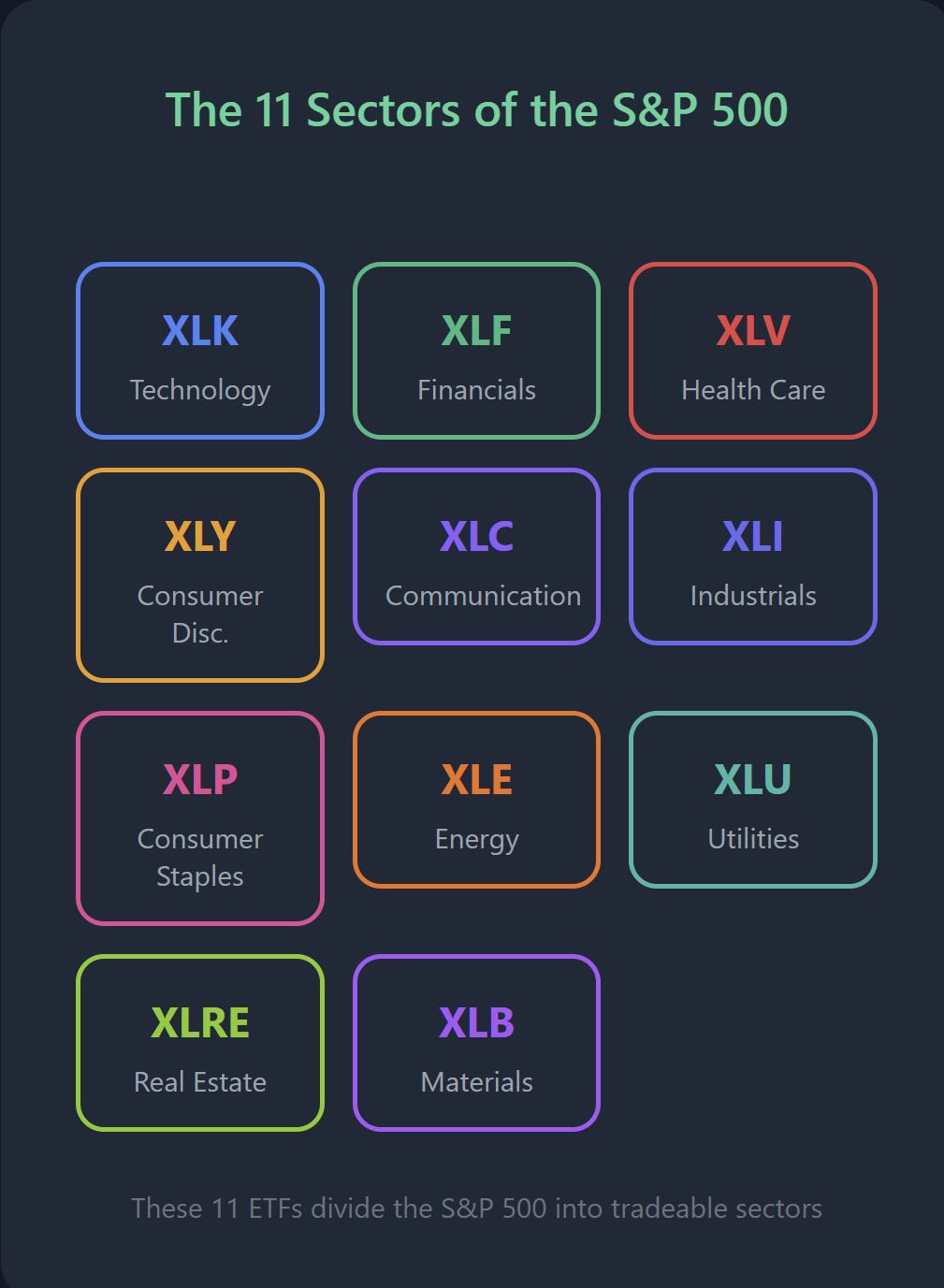
- XLF – Financials
- XLK – Technology
- XLV – Health Care
- XLY – Consumer Discretionary
- XLP – Consumer Staples
- XLE – Energy
- XLU – Utilities
- XLI – Industrials
- XLB – Materials
- XLRE – Real Estate
- XLC – Communication Services
Instead of buying all 500 companies in SPY, you can target a specific sector. That gives you options.
The question to ask yourself: Do I want broad sector exposure, or do I want a single stock?
Both have their place. Let me show you when I use each.
1. When to Skip the ETF and Buy the Stock
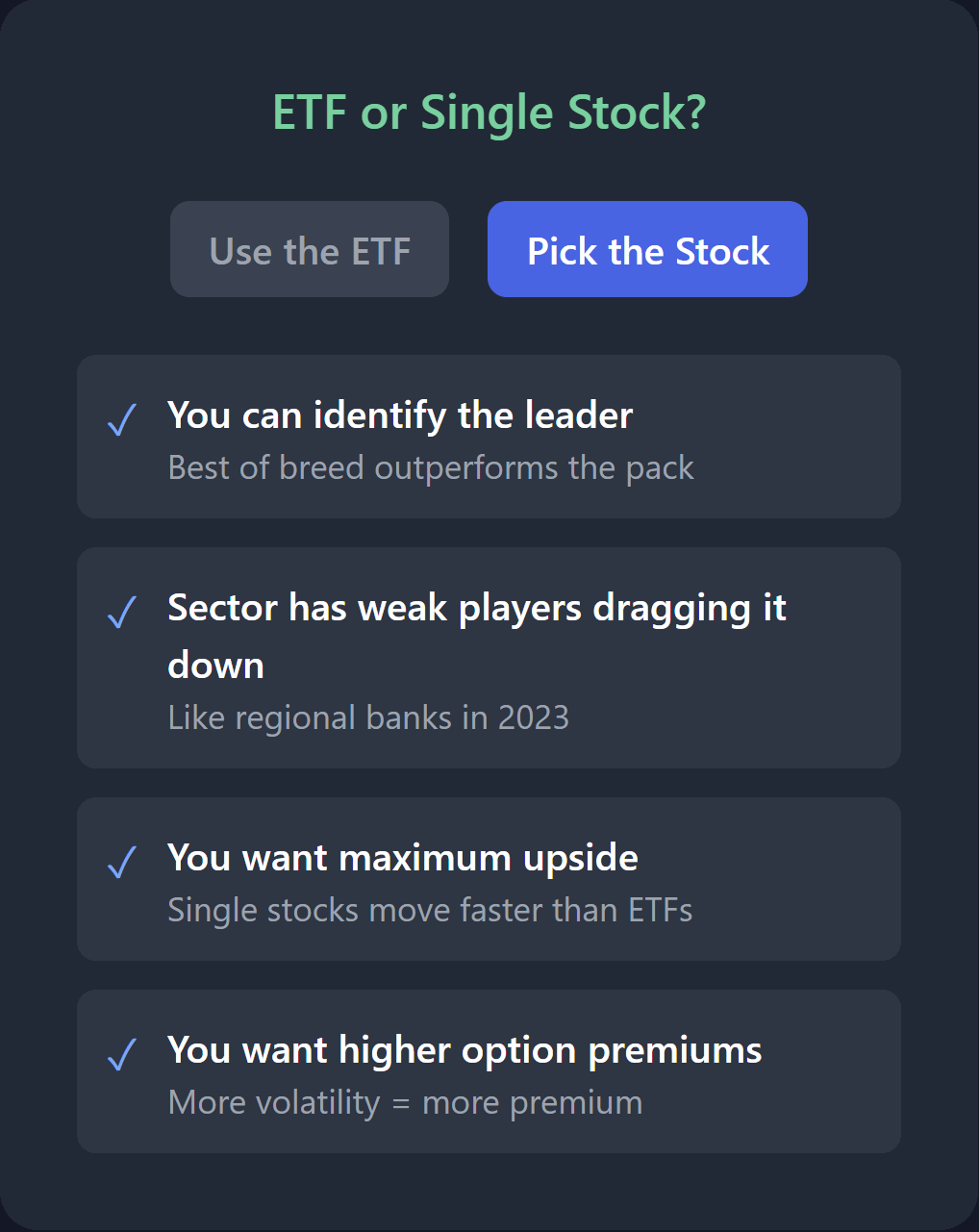
Sector ETFs won’t move as fast as individual stocks. That’s usually a feature, not a bug—but sometimes you want the single name.
Here’s a real example.
During the 2023 banking crisis, I was buying JPM instead of XLF or KRE. Why? JPM is best of breed. I didn’t want exposure to questionable regional banks. I wanted the strongest player in the sector.
Look what happened. JPM dipped just as much as XLF during the panic. But it outperformed XLF by almost 30% on the recovery.
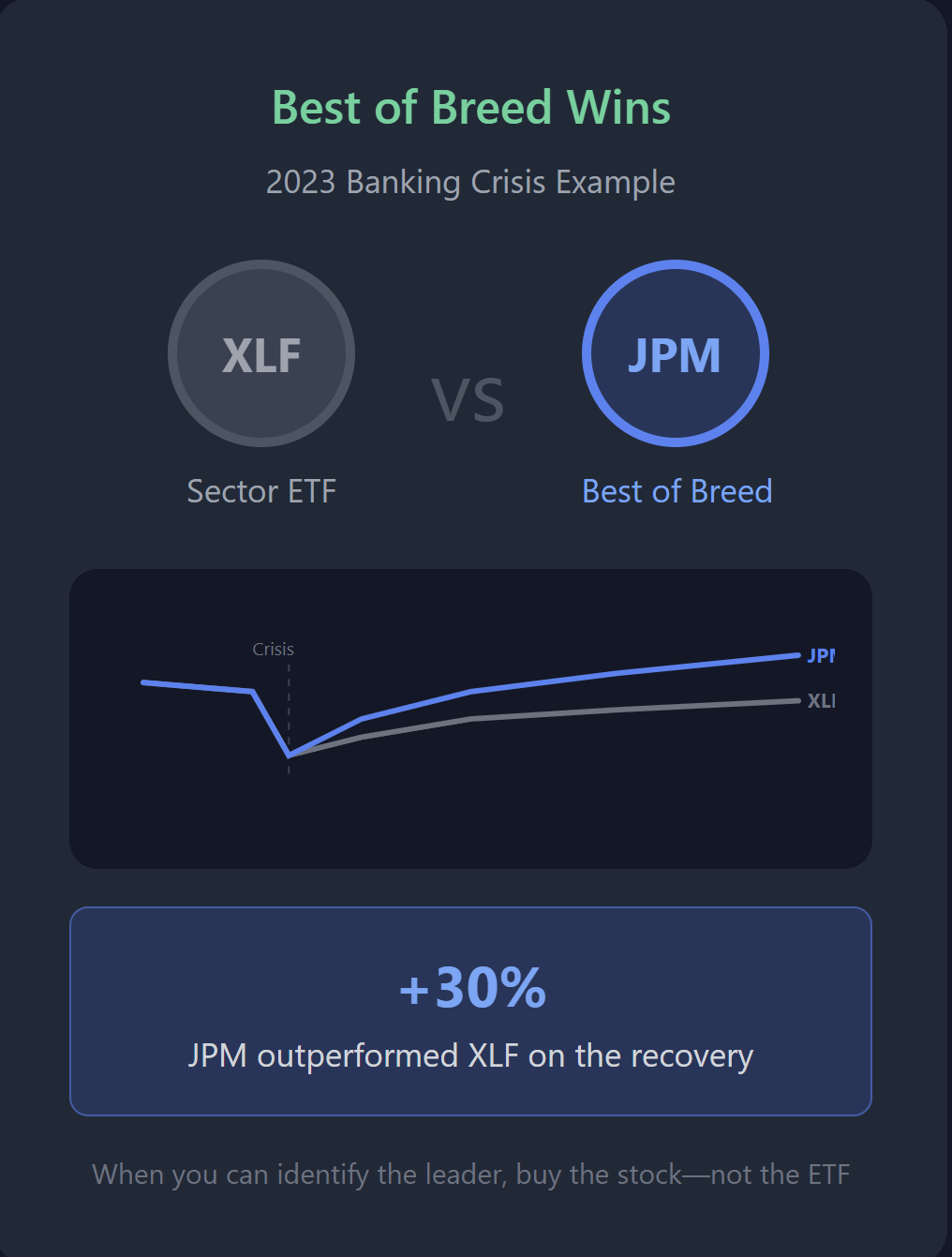
That single decision—buying JPM over the sector ETF—made me more than my old corporate salary.
Remember this. It will happen again in a different sector. When there’s a crisis and you can identify best of breed, buy the stock, not the ETF.
2. When the ETF Beats Stock Picking
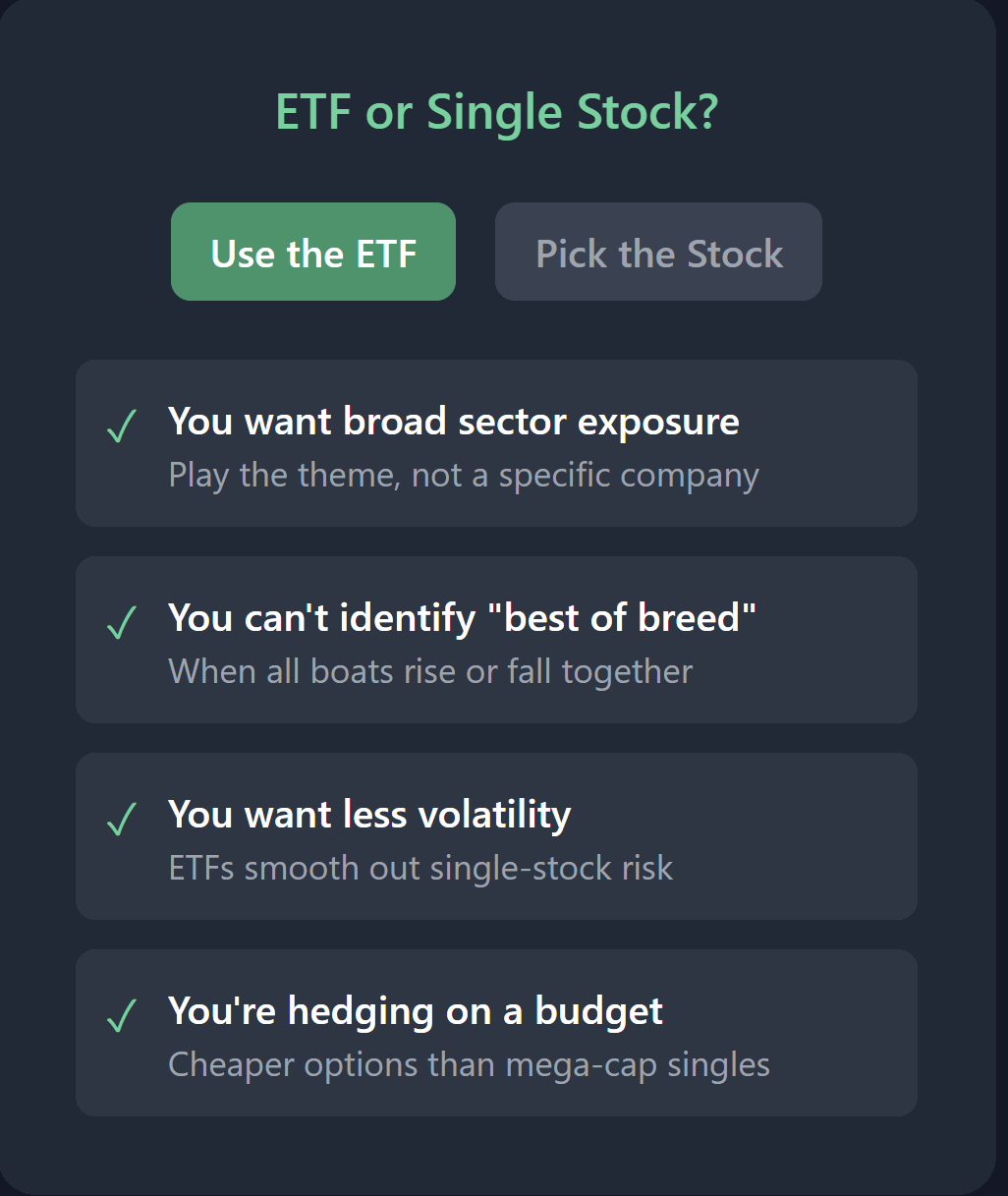
Sometimes I don’t want to pick individual names. I just want exposure to a theme.
Take XLY—consumer discretionary. This sector includes retail, autos, hotels, apparel. When consumers start feeling the effects of rising rates and inflation, this whole sector tends to drop.
Instead of trying to figure out which retailer or hotel chain would fall the most, I wanted broad exposure. So I traded XLY.
Two short trades in XLY over a couple weeks paid for a beach vacation and two months of utility bills.
The thesis was simple: consumer spending slows when money gets tight. I used moving averages to pick my entries. That’s it.
You can build these kinds of trades yourself. People pay thousands for this information. I’ve made hundreds of thousands doing exactly what I’m showing you.
Does it always work? No. But you miss 100% of the trades you don’t take.
3. Hedging Expensive Stocks on the Cheap
Here’s a trick most people don’t know.
Say you own some META shares, but not 100. Earnings are coming up and you want downside protection. Buying puts on META is expensive.
Look at XLC. Its top holding is META.
A put spread on META might cost you $255 for a max profit of $245. A similar setup on XLC can make you $285 with less cost.
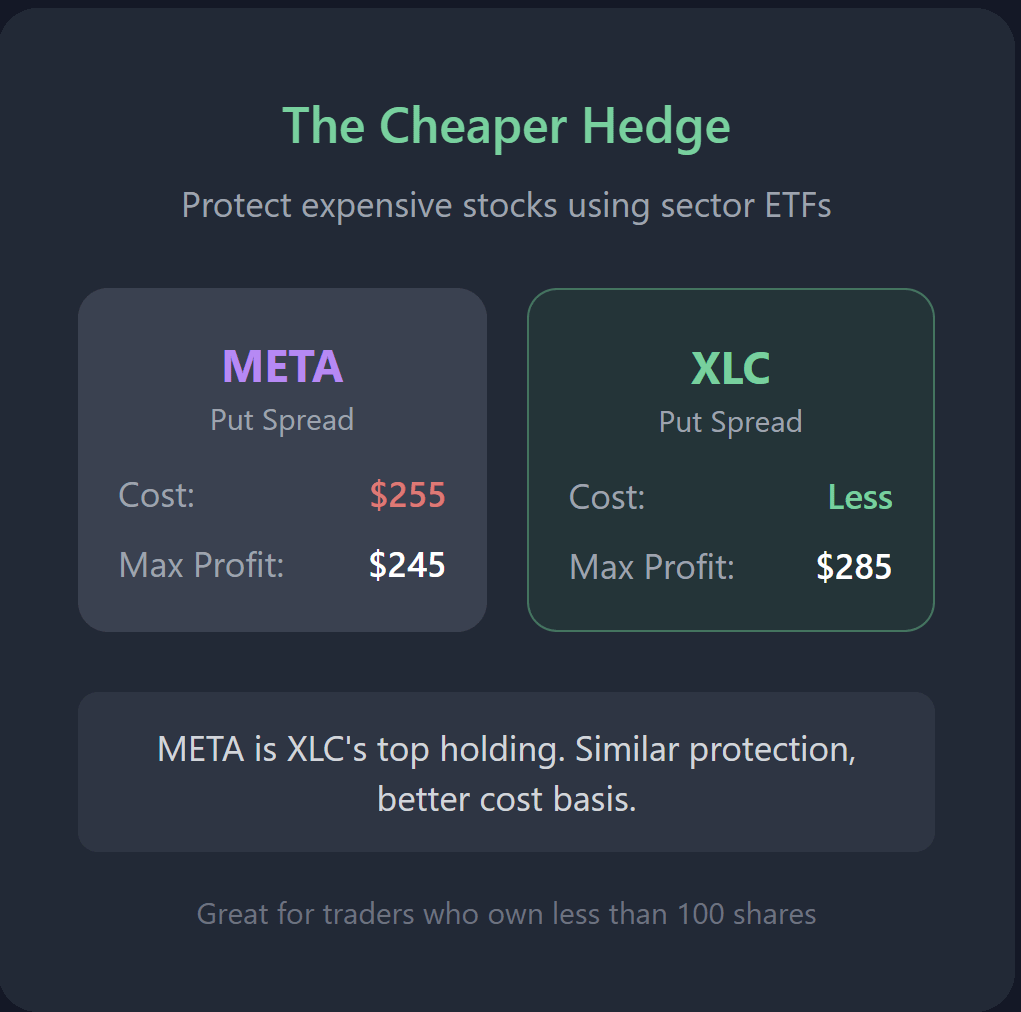
Yes, XLC won’t move as much if META tanks. But look at your delta and the cost savings. This is perfect for traders who own less than 100 shares or want to speculate without paying full freight.
4. Sector ETFs Pay Dividends
You didn’t think I’d write a post without mentioning dividends, did you?
Sector ETFs pay quarterly dividends. There’s a small expense ratio (0.1%), but XLRE and XLE both yield over 3%.
If you’re wheeling these ETFs—selling puts, getting assigned, selling calls—you’re stacking dividend income on top of your premium income.
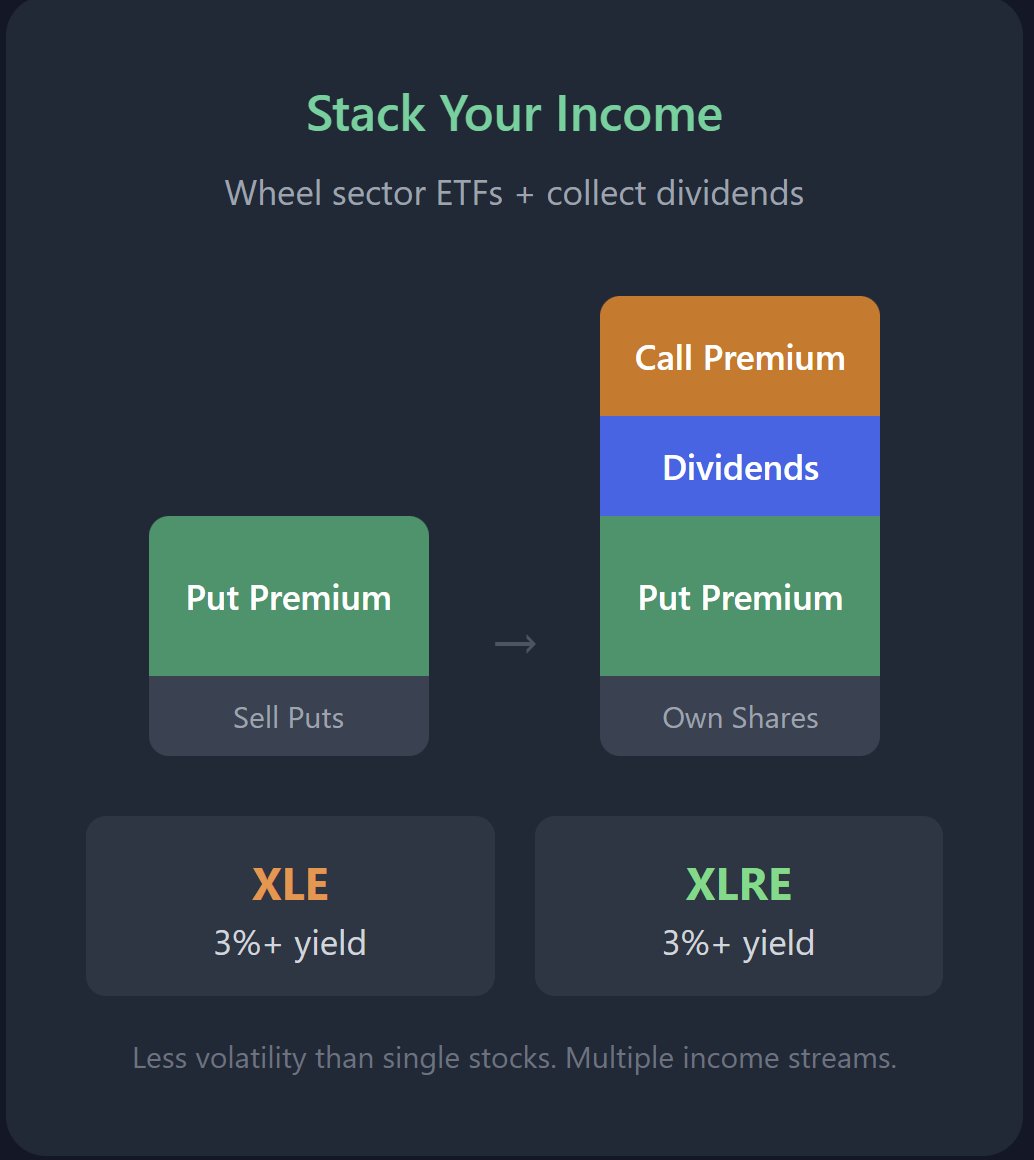
Buy-writes on ETFs are also less volatile than single stocks. The trade-off? Covered call premiums are usually lower than on individual names. For every positive there’s a negative. Smart people make the markets.
5. Playing Market Cycles
Money flows in cycles. When it leaves one sector, it usually flows into another.
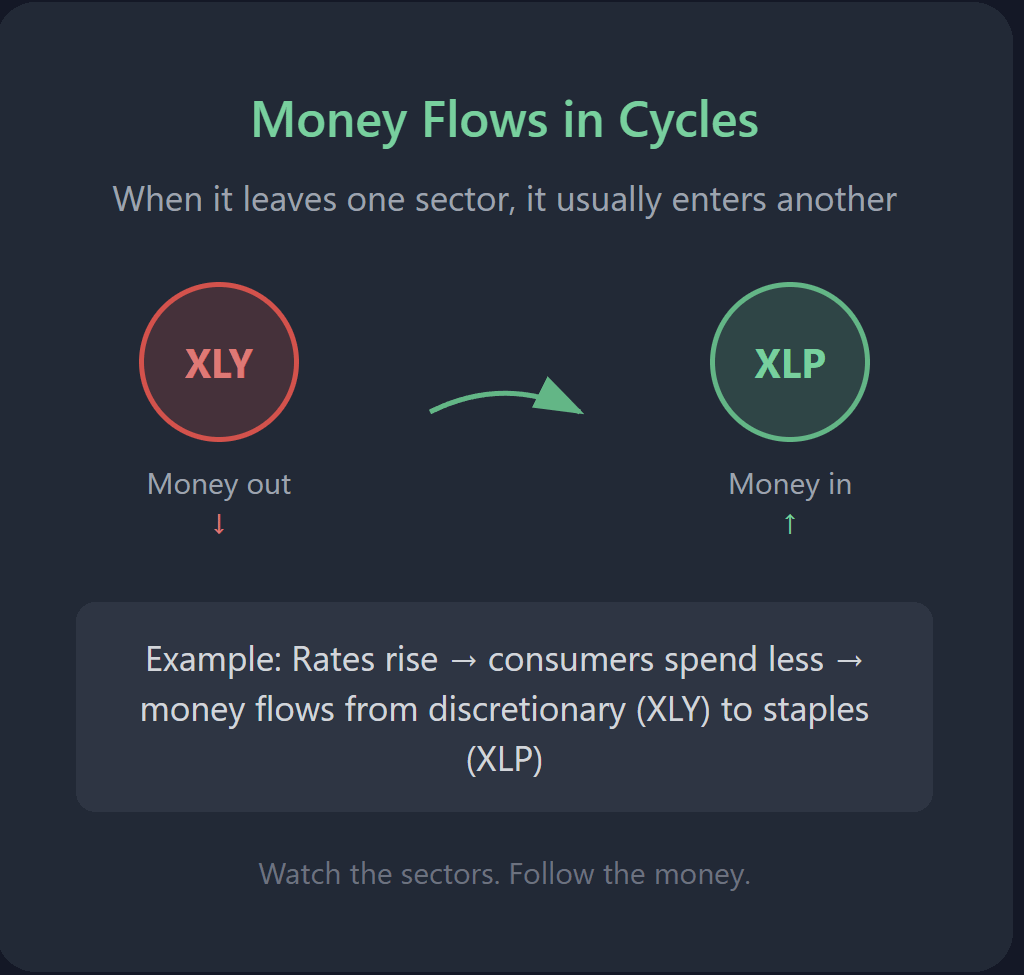
Sector ETFs let you make that bet without picking individual stocks. You get broad exposure to a theme—whether it’s seasonality, economic cycles, political shifts, or sentiment changes.
All the strategies we use at Good Kids Trading work on these ETFs. You can sell puts, trade spreads, wheel them. The options aren’t always as liquid as big single names, but they’re solid alternatives in many situations.
Thanks for reading! Subscribe for free to receive new posts and support my work.
Bottom Line
There’s so much focus on individual stocks that traders forget about sector ETFs. They’re not as exciting. But “boring” often means “profitable.”
Here’s what I want you to do: Build a watchlist with all 11 sector SPDRs. Watch how they move relative to each other. Start noticing where money flows.
I’ll cover other ETFs worth adding to your watchlist in a future post.
Turning knowledge into wealth,
$Maxwell
This is for educational purposes only. I’m not a financial advisor—just a trader who’s been doing this for nearly 30 years. You’re responsible for your own decisions and the buttons you click in your brokerage account.