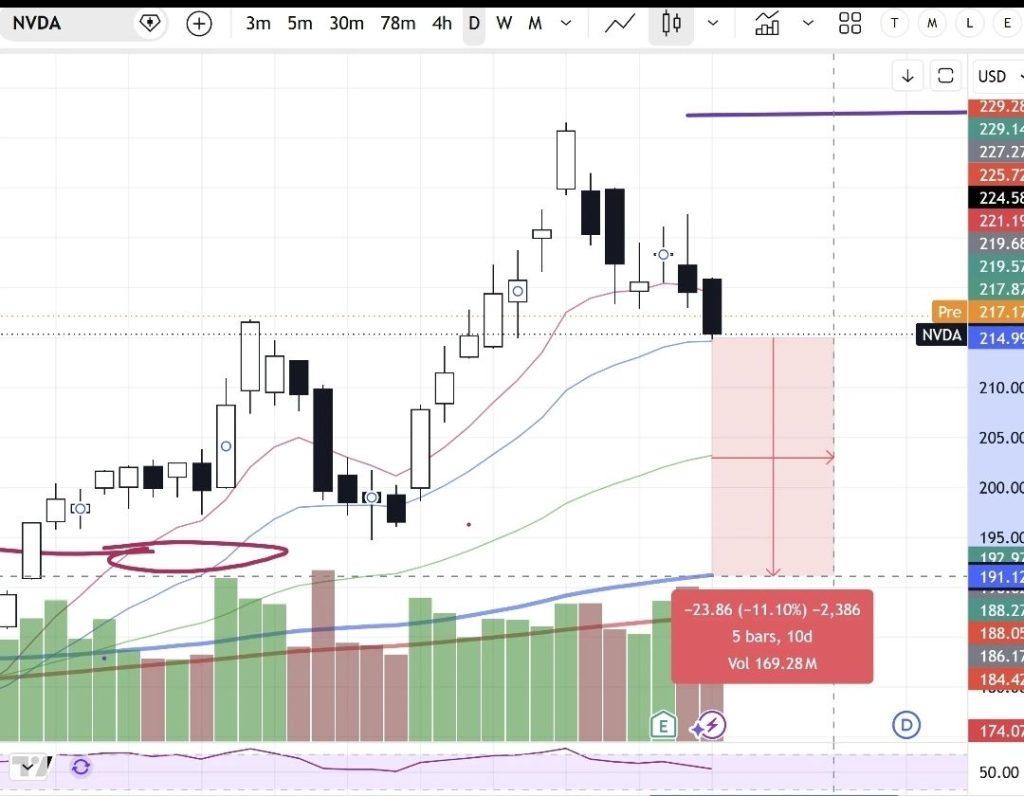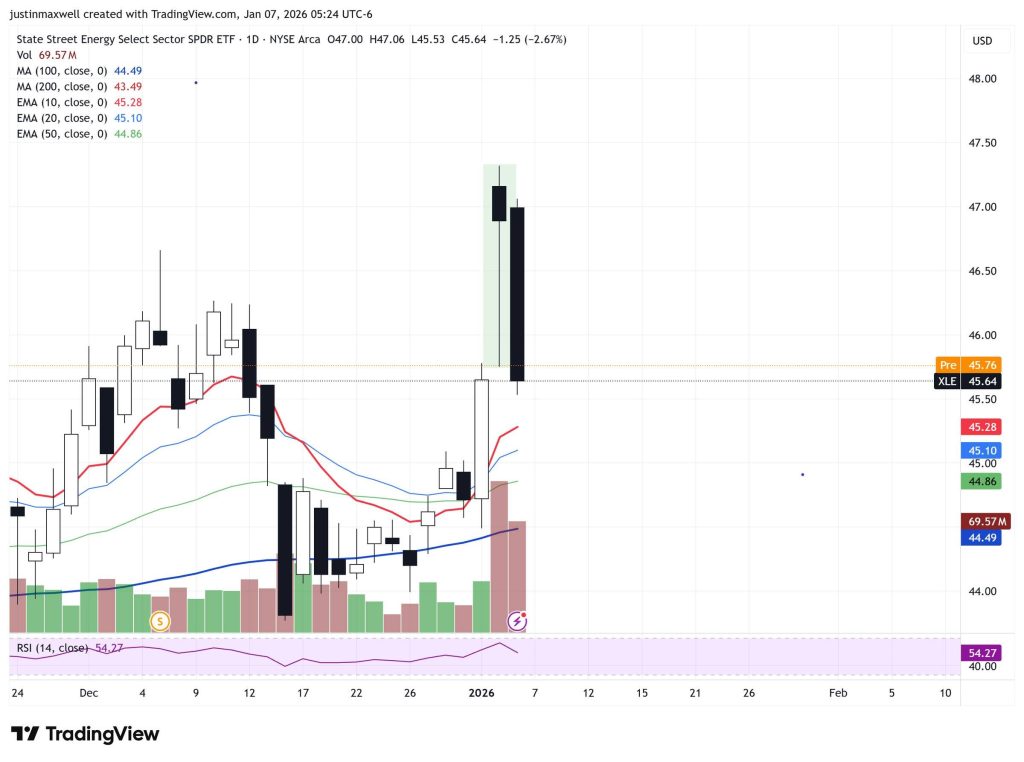
I’ve been trading a long time, decades, really, and if you forced me to strip everything off my charts except one thing, it’d be moving averages.
No fancy oscillators,
Thanks for reading! Subscribe for free to receive new posts and support my work.
No volume profiles,
No donchian channels
We don’t need fancy indicators cluttering up the screen and causing confusing. All I need are those smooth lines that tell me where the price has been and hint at where it might go next.
Moving averages are the backbone of how I spot entries for buying shares, selling puts, or deciding when to sell covered calls (or even trim some shares.) They’re simple, they’re usually reliable, and after all these years, I don’t need much else.
There are a few types of moving averages out there, but I stick to two main ones:
- Simple Moving Average (SMA): Just the straight average of closing prices over X periods. Clean and no-nonsense. I use these for longer time frames.
- Exponential Moving Average (EMA): Weights recent prices more heavily, so it hugs the action tighter and reacts faster to changes. I use these for shorter time frames, because they amore more reactive.
The others (WMA, SMMA) are fine, but I don’t bother with them.
On my charts, you’ll always see:
- 100 and 200 SMAs for the big-picture trend and major support/resistance.
- 10, 20, and 50 EMAs for shorter-term moves and quicker signals.
Why these?
- The 100 and 200 SMAs give me that long-term context: where the “real” trend lives over months.
- The shorter EMAs (10/20/50) catch the recent momentum without lagging too much.
I use EMAs on shorter timeframes because they snap to price action faster, and SMAs on the longer ones for a steadier view.
Pairing these with candlesticks? That’s where the magic happens. A candle closing above a moving average screams bullish to me. Rejection right off it? Usually bearish vibes. How price interacts with these lines helps me gauge direction, find spots to get in or out, and avoid fighting the tape.
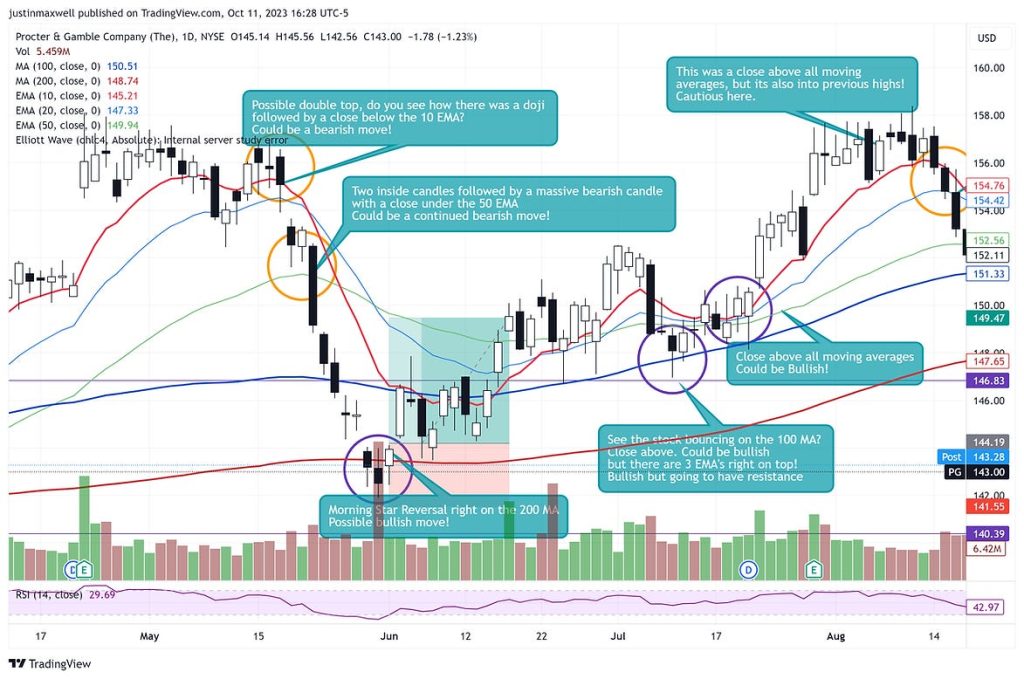
Take PG as an example. Back in late 2023, I marked up a bunch of spots on the daily chart where candles danced around these averages. Look how many times we got clear signals:
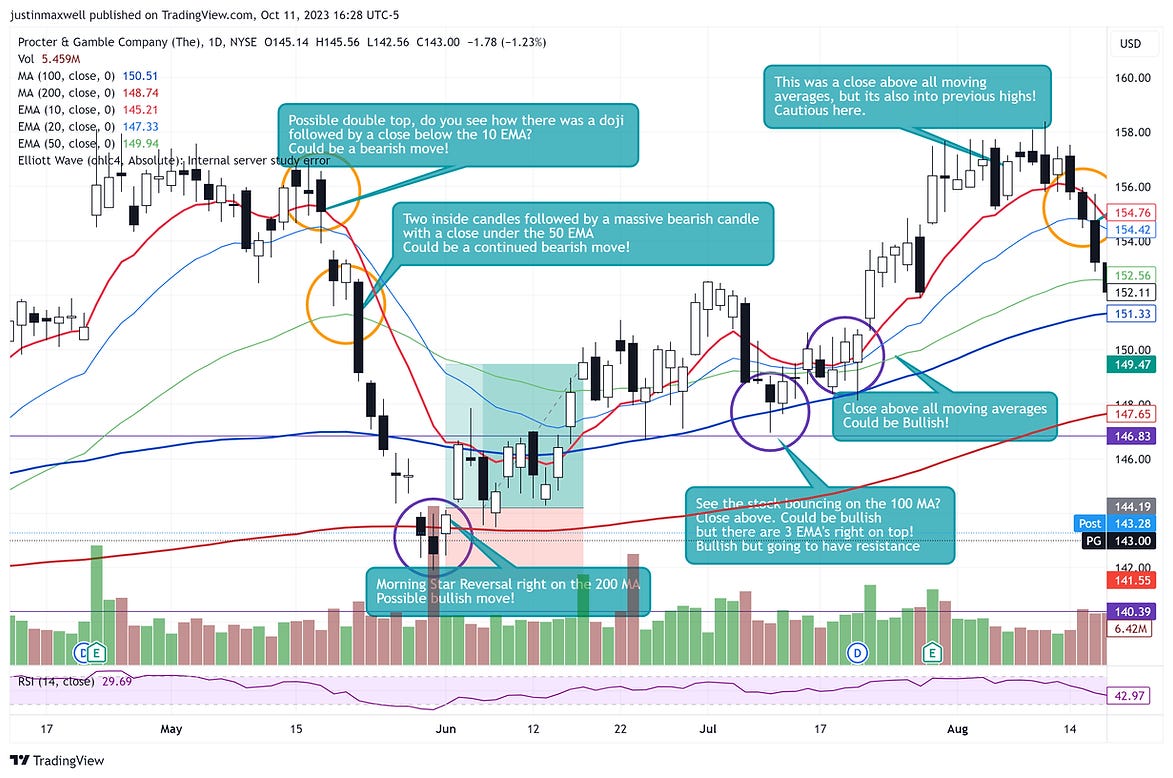
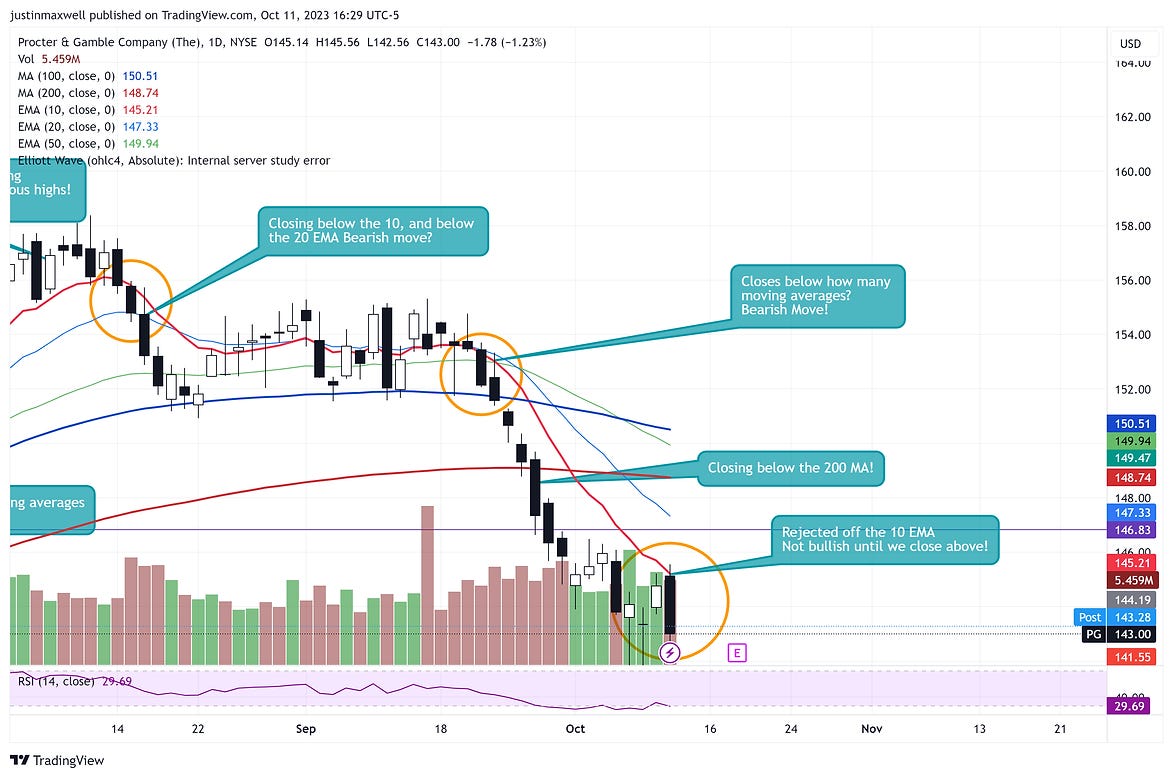
See the patterns? Doji at highs, dojis rejecting the 10 EMA, closes below the 20 leading to drops, reversals bouncing off the 200. It doesn’t nail every move, nothing works all the time, but it gives me an edge I trust.
Master the Patterns
Moving averages tell you where to look, but price action tells you when to act. There are 7 chart patterns I LOVE to combine with moving averages.
I’ve detailed these in my 7 Favorite Reversal Patterns guide. It’s designed to help you remove emotion from the equation and provide a clear framework for every trade.
[Get the 7 Favorite Reversal Patterns Guide]
Zoom in to 5-minute charts for intraday scalps, or pull way out to weekly/monthly for the macro view. When the averages line up across timeframes? That’s my green light: double or triple confirmation that builds real confidence.
I sell puts around moving averages. Sell covered calls at longer term Moving averages. Even trim shares on strength off an average. Simple as that.
And here’s one of my personal favorites: “Buy Apple off the blue line.” On the weekly chart, every time AAPL dips to the 100 SMA, I’ve bought in. It’s been a solid play for years: price respects it, bounces, and trends higher in the uptrend.
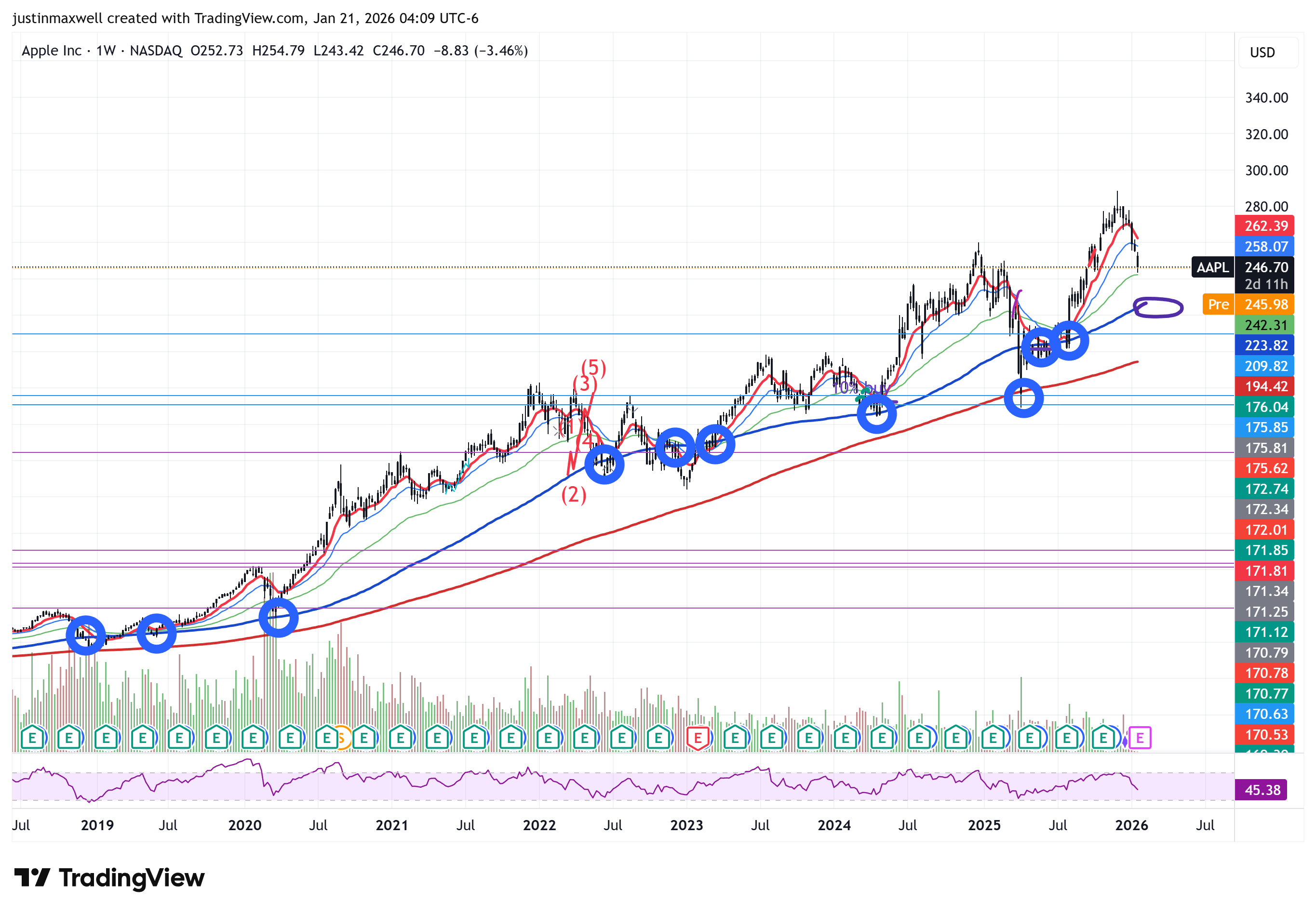
You can see I’ve put a purple circle where I’m buying Apple shares again!
Make Your TradingView Chart Look like Mine:
I get asked constantly why my lines look different from everyone else’s. To solve that, I put together a FREE, step-by-step guide on how to set up your TradingView charts exactly like mine.
Stop guessing and grab the guide!
You don’t need to overcomplicate it. Keep it simple: Buy quality stocks you like when they pull back to a key moving average in an uptrend. Or layer on whatever complexity fits your style. Just pick a plan and follow it—no excuses.
If this resonates, make sure you subscribe and drop a comment!
Thanks for reading! Subscribe for free to receive new posts and support my work.
Turning knowledge into wealth,
$Maxwell
This is for educational purposes only. I am not a financial advisor, and nothing here should be considered financial or trading advice. I don’t know your financial situation, risk tolerance, or goals.
I’m just a guy on the internet sharing how I think about markets. You are solely responsible for any trades you place and the buttons you click in your brokerage account