Most traders are stressed when a stock they’re watching starts pulling back.
I’m sitting here hoping NVDA drops more.
Not because I’m short. Because of how I set this trade up.
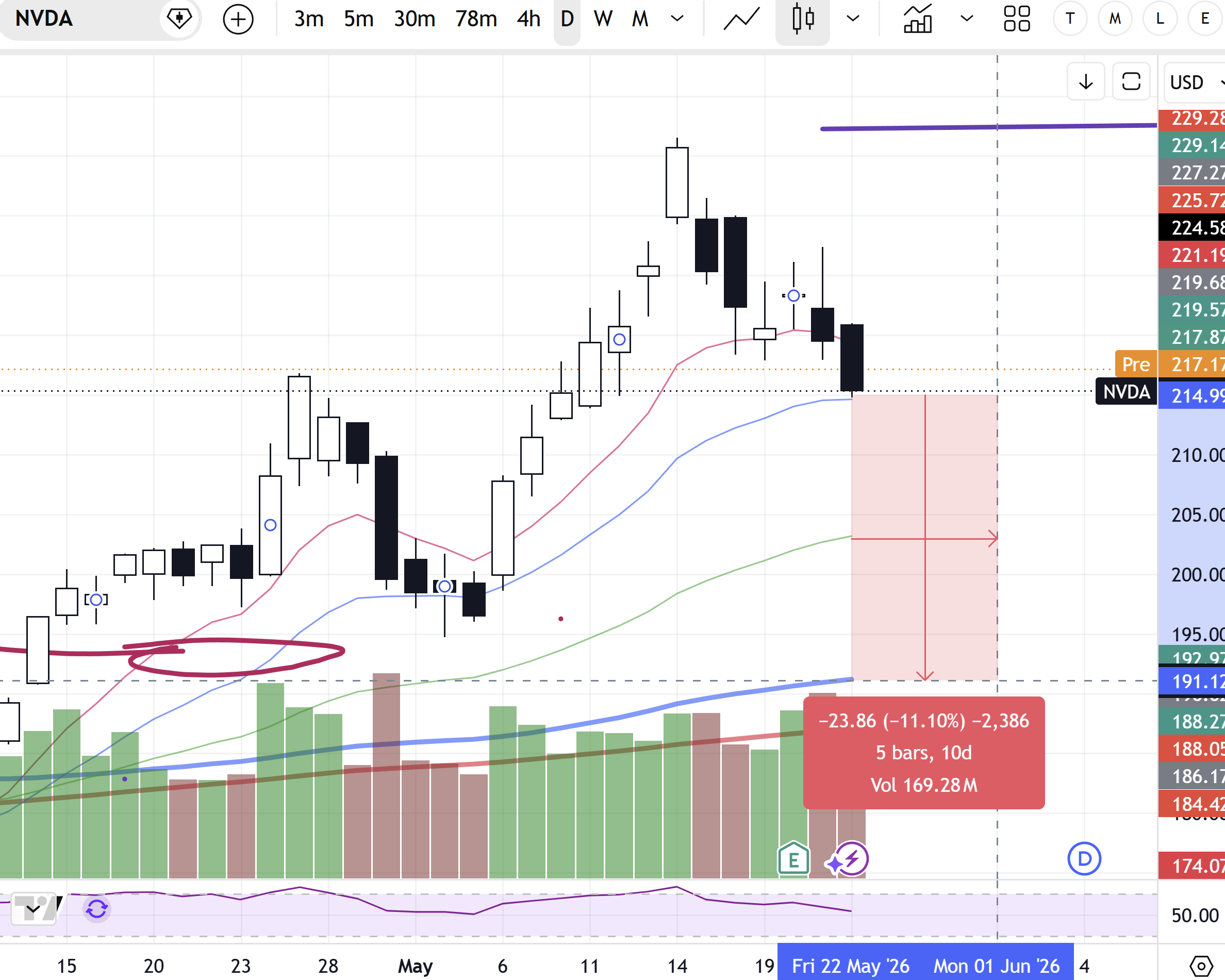
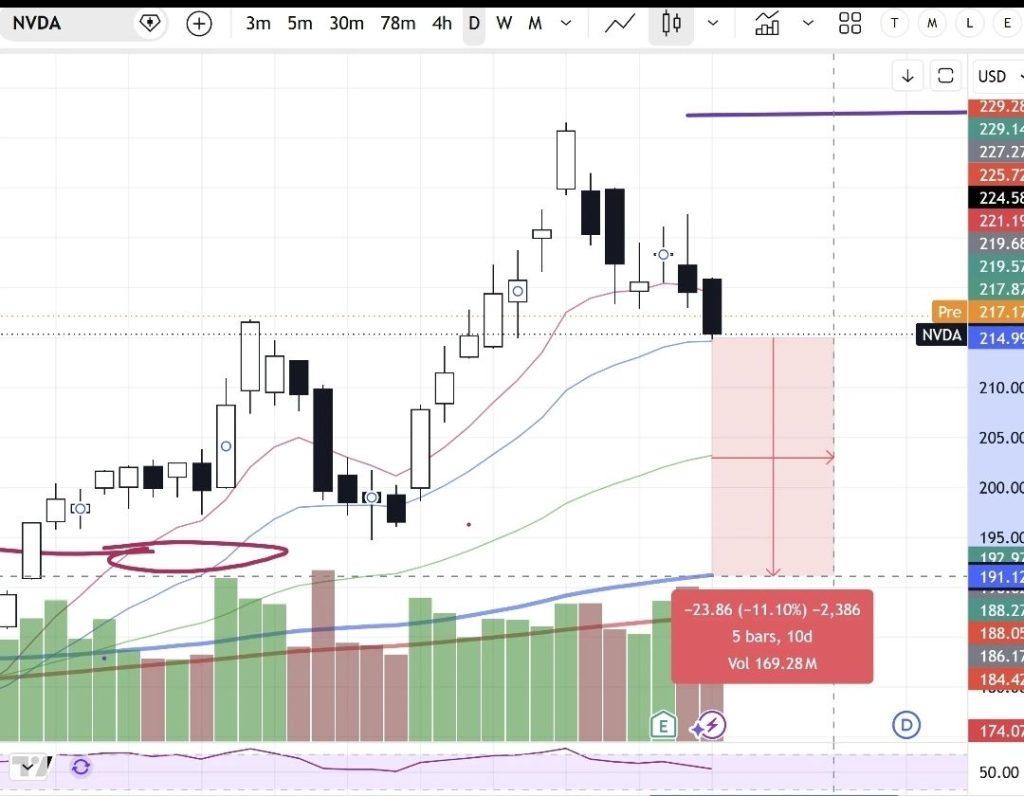
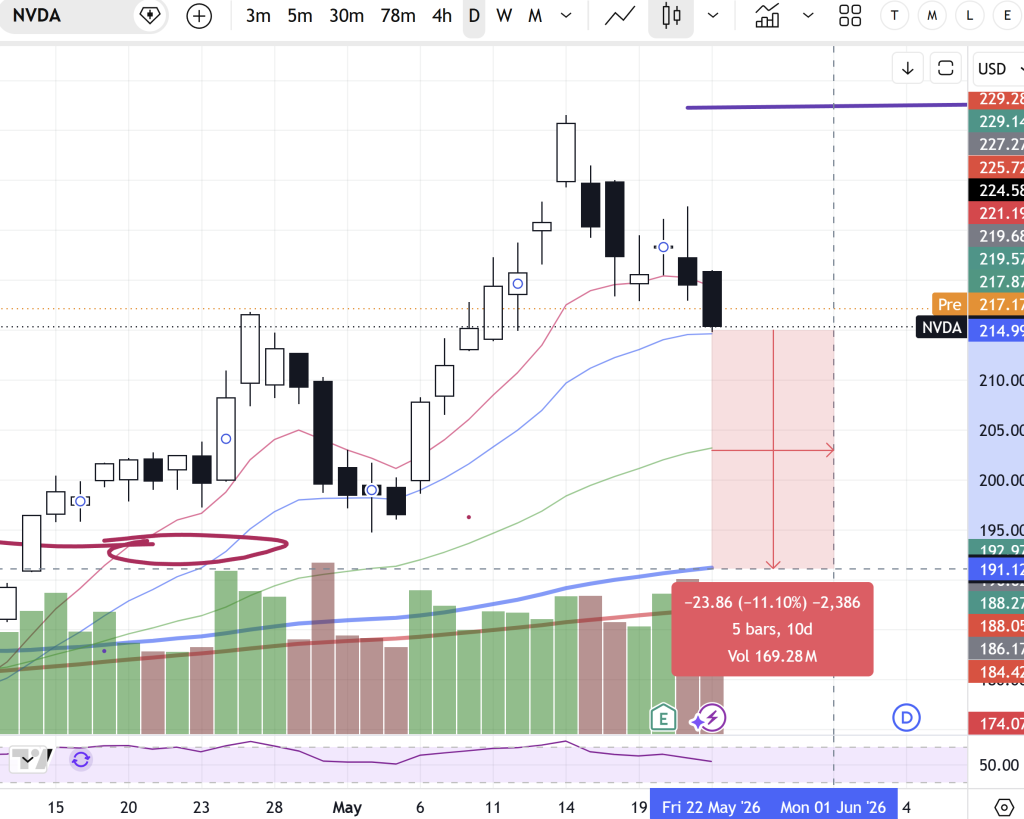
Here’s the situation. NVDA is trading around $215 and it’s 11% above the 100 simple moving average. I still wanted exposure. I still wanted some income. But selling a naked put on a stock this extended? That’s not a bet I want to make.
So instead of not trading this stock at all, or just selling a put, I sold a spread.

I sold the 205 put and bought the 200 put at the same time. Selling the spread means I collected less upfront $117 instead of $379.
But I got an insurance policy for giving up that extra premium.
That long put I own goes up in value as NVDA falls. So as the stock pulls back, my long put gains value as the short put loses.. In my mind the spread gets more valuable. I’m not sitting here hoping it stays above $205 like I would be with a naked put. I’m watching the chart and waiting for the right moment to close the long put and collect a bigger credit. I would love to unravel this spread!
Unravelling means I want to close the long put for a credit, then manage the short put like we do when we sell a put.
When I bought it, that 200 put cost me a chunk of that $379. If NVDA pulls back to the right spot, that same put could be worth $500 or more. I close it, pocket the difference, and now I’m left with just the short 205 put, but with extra credit in my pocket that makes rolling it out for more income easy. I might not even want the shares.
That’s why I’m rooting for the dip.
When do you exit?
A lot of people overthink this. I use the chart and the math.
Find the spots where the stock might reverse. Look for a key moving average, a support level, a pattern. If you haven’t grabbed my 7 Chart Patterns You Can’t Afford to Ignore yet, go get it. That’s exactly what we’re looking for here. And if you want your charts dialed in the way I have mine set up, grab the Trading View Moving Average Setup Guide too. These setups become a lot more obvious when you’re looking at the right thing.
When the stock pulls back to one of those levels, you close the long put and collect the credit. I set this trade up for $117. If that long put goes in the money, it could be worth $500–600. Close it, bank the difference.
Now you’re left with just the short put — but with that extra credit in your pocket, rolling it out for more income is straightforward. You might not even feel the need to take the shares.
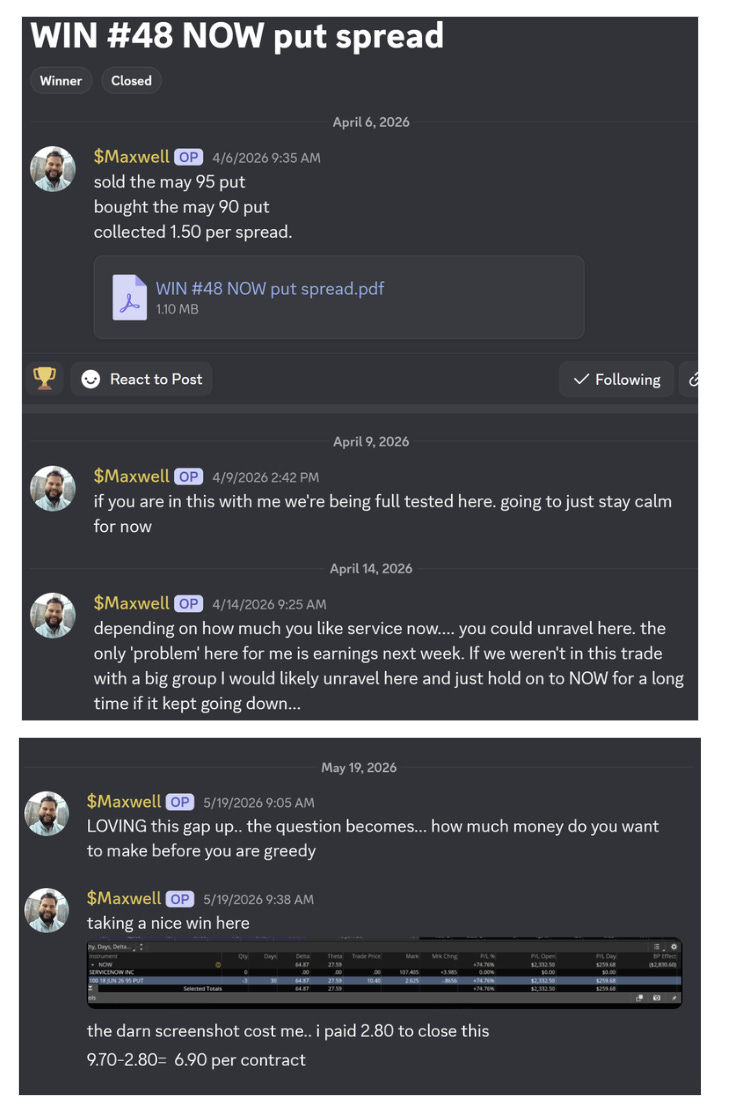
We placed this exact trade on ServiceNow in the Inner Circle and just closed it out last week.
Same setup (selling a put spread), one contract, made almost $700
That’s what we do every week in the Mr Money Maxwell Inner Circle real trades, real setups, weekly income newsletter.
Thanks for reading! Subscribe for free to receive new posts and support my work.
Put spreads belong in your toolkit. You generate income, you limit your downside, and if you set it up right — you’re secretly rooting for the dip.
Grab the 7 Chart Patterns You Can’t Afford to Ignore and the Tradingview Moving Average Setup Guide if you haven’t already. Both free. Both useful for finding entries and exits on trades exactly like this one.
And if you want to see this in real time, come join the $Maxwell Inner Circle