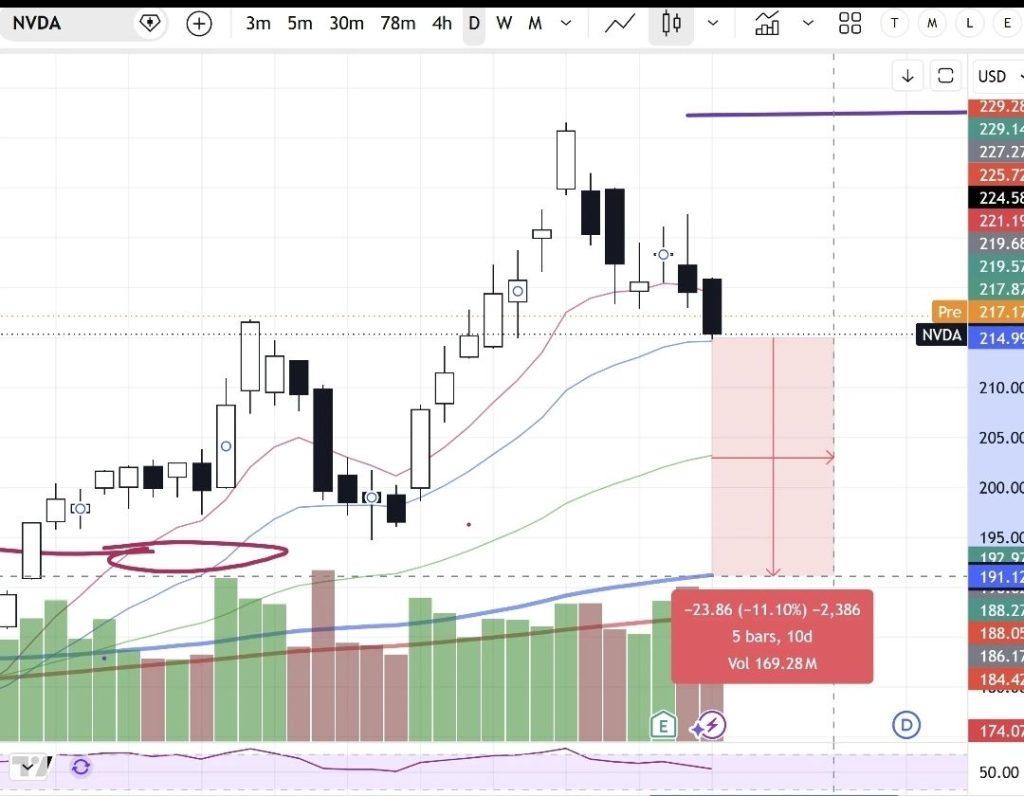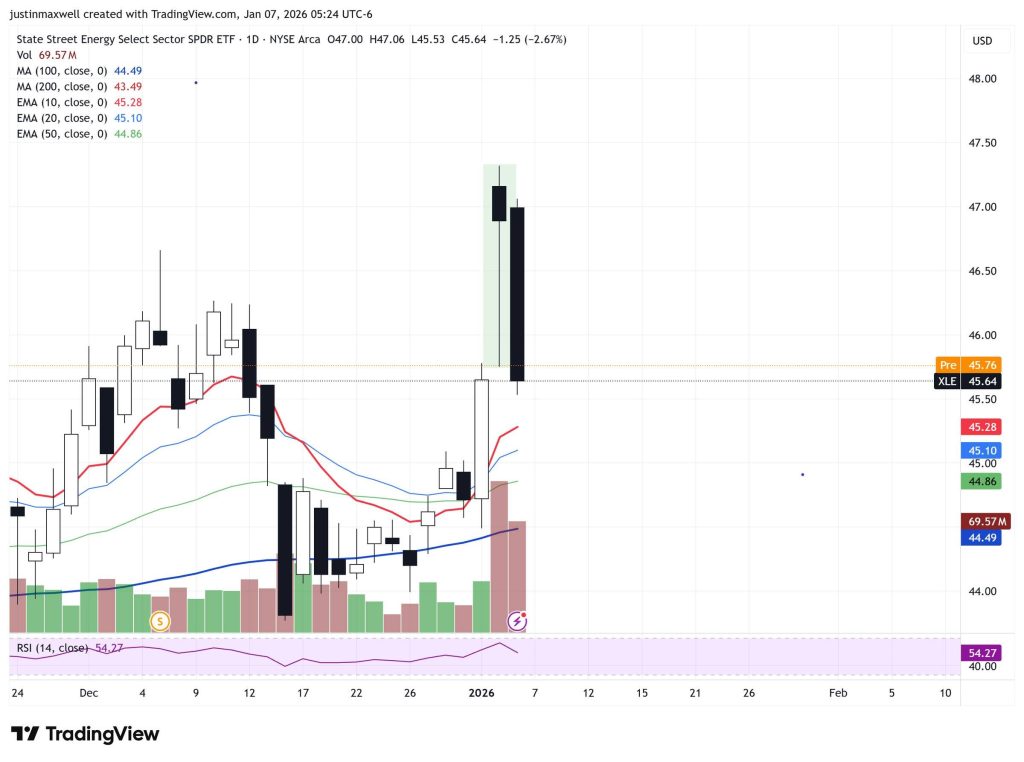
Most traders waste hours scrolling through charts looking for trades.
I don’t.
I’ve built a watchlist system that lets me sort through 200+ stocks in minutes. I know exactly what I’m looking for, where to look, and when to act.
Today I’m sharing how I do it.
Why Watchlists Matter
Think of watchlists as a filter. There are thousands of stocks out there. You can’t trade them all. You shouldn’t try.
Your watchlists should be built around your trading plan. If you trade dividends, you need a dividend watchlist. If you sell puts, you need a list of stocks you’d happily own. If you’re looking for sideways movers to collect theta, you need a list for that too.
No trading plan? Use someone else’s until you build your own. It’s not plagiarism—it’s avoiding reinventing the wheel.
My Watchlist Categories
Here’s how I organize mine:
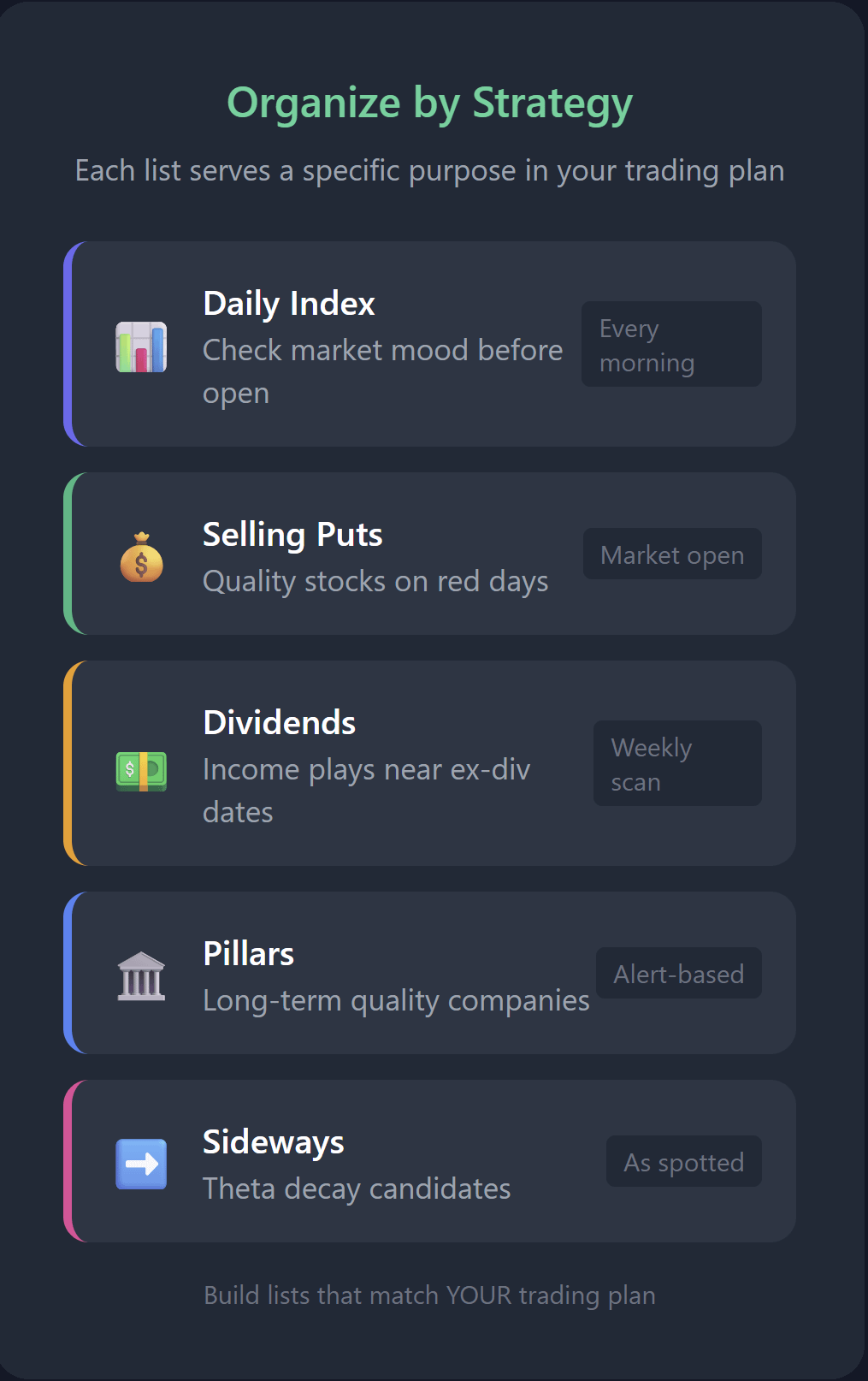
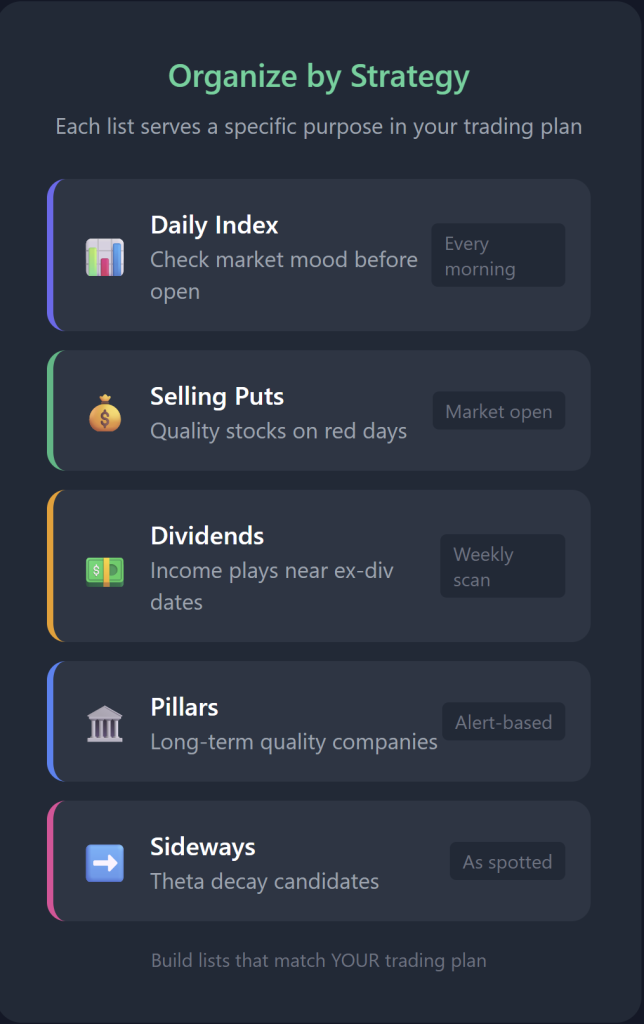
Daily Index The first thing I check every morning before the market opens. Major indexes only. I’m just gauging the mood—is it a risk-on or risk-off day?
Selling Puts My favorite strategy. As soon as the market opens, I sort my main watchlist by percent change. I’m looking for quality companies having a big down day. Put premium is higher on red days—that’s when I want to sell.
Dividend Stocks Sorted by percent down. I’m looking to buy shares or sell puts at support, depending on the next ex-dividend date and the premium available.
Pillars Long-term quality companies I believe will appreciate over time. I don’t check this multiple times a day—it’s more about making sure I have alerts set up so I don’t miss opportunities.
Sideways Movers Stocks consolidating for long periods. Theta decay is my best friend. If a stock isn’t going anywhere, I can still make money selling options on it.
The Color Code System
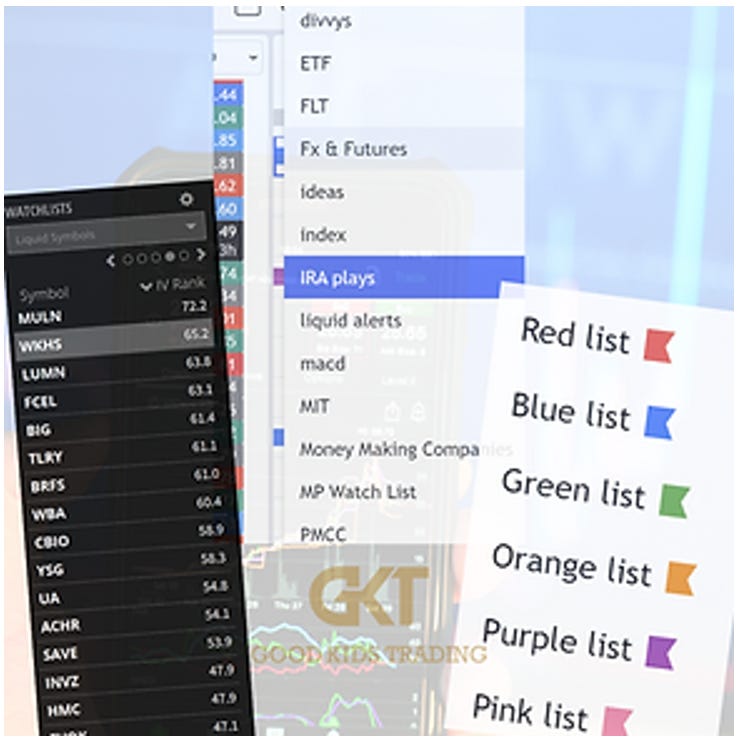
TradingView lets you color-code stocks within watchlists. I use this for short-term tracking:
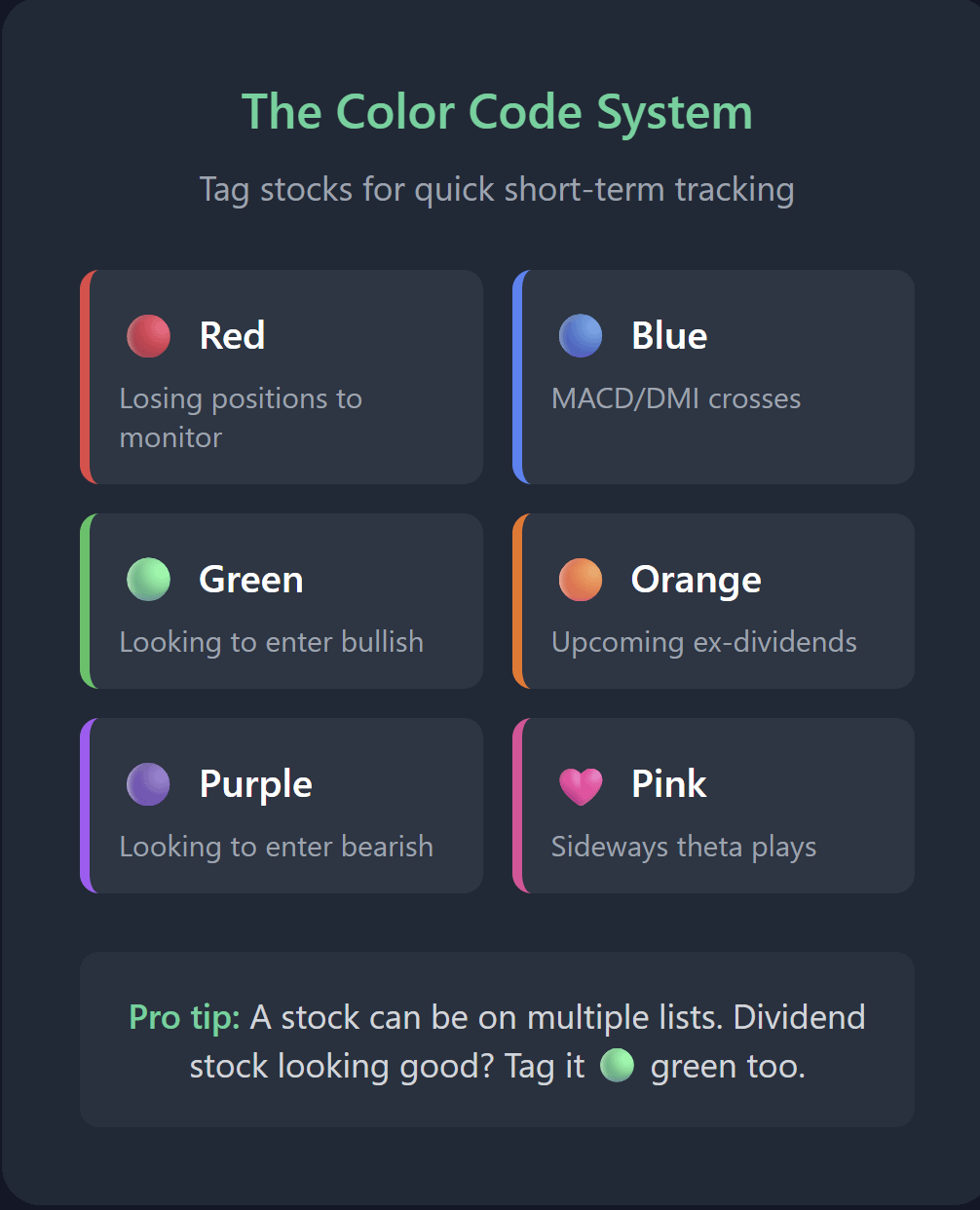
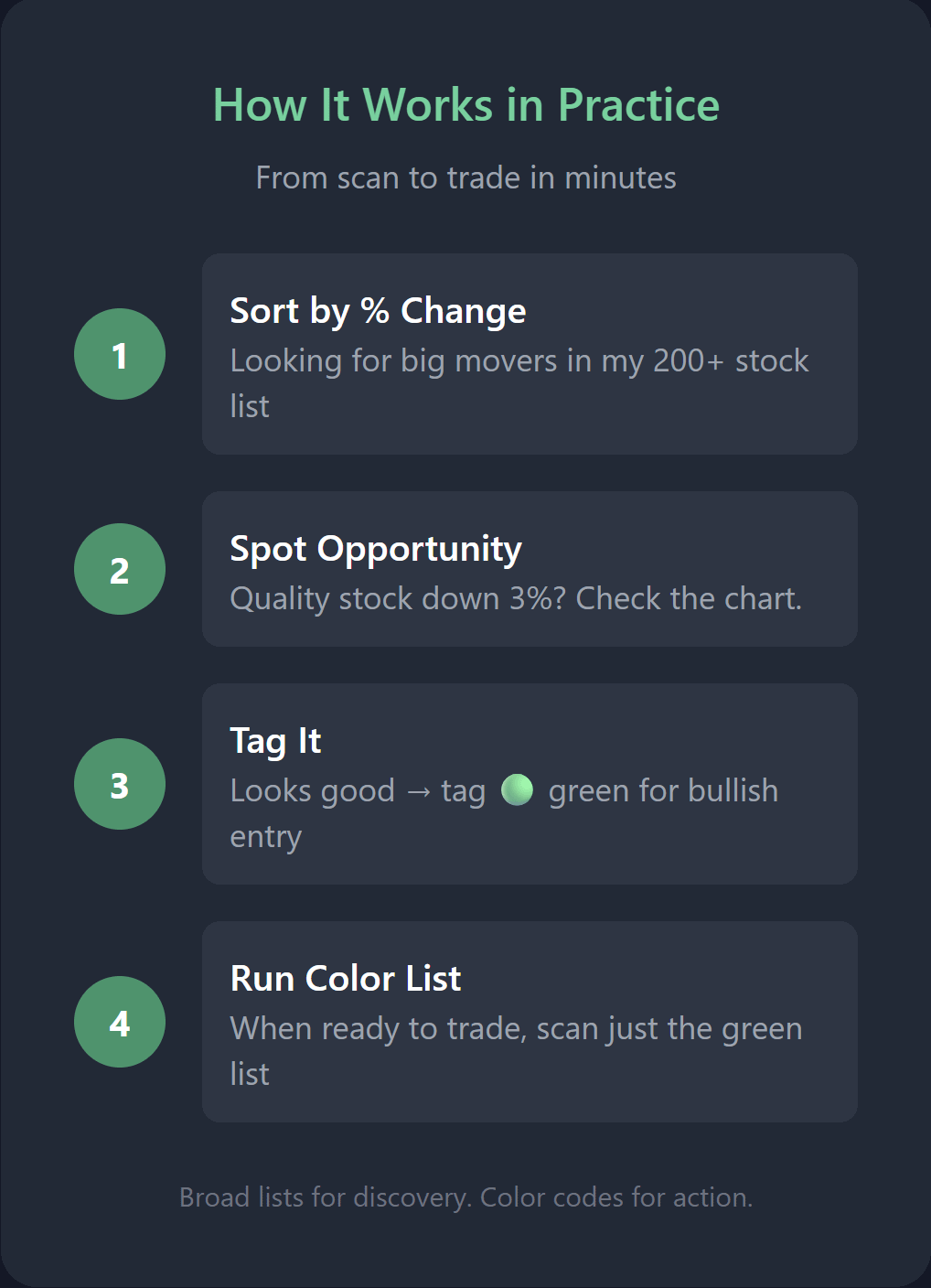
Here’s how it works in practice: I’m scanning my dividend watchlist and spot a stock that looks like a good buy. I tag it green. Now it’s on my dividend list and my green list. When I’m ready to add bullish delta, I just run through the green list.
Broad lists for the long term. Color codes for the short term. Saves hours.
Maintaining Your Lists
Building a watchlist is step one. Maintaining it is where most traders fail.
Add and remove continuously. The more you trade, the more you’ll find favorites—and stocks that seem to always lose for you. After a few losses on the same ticker, I remove it. There are thousands of other stocks out there.
Draw support and resistance. Every time you analyze a chart, add the key levels. Color-code your lines (I use purple for weekly, blue for daily). That line you draw today will still be there months from now. It takes a few minutes but saves hours over time.
Use built-in lists. Your broker and TradingView have pre-built watchlists. Dividend aristocrats, liquid symbols, high IV stocks. Don’t reinvent the wheel—use what’s already there.
My Weekly Routine
Every Sunday I spend maybe 20 minutes on maintenance:
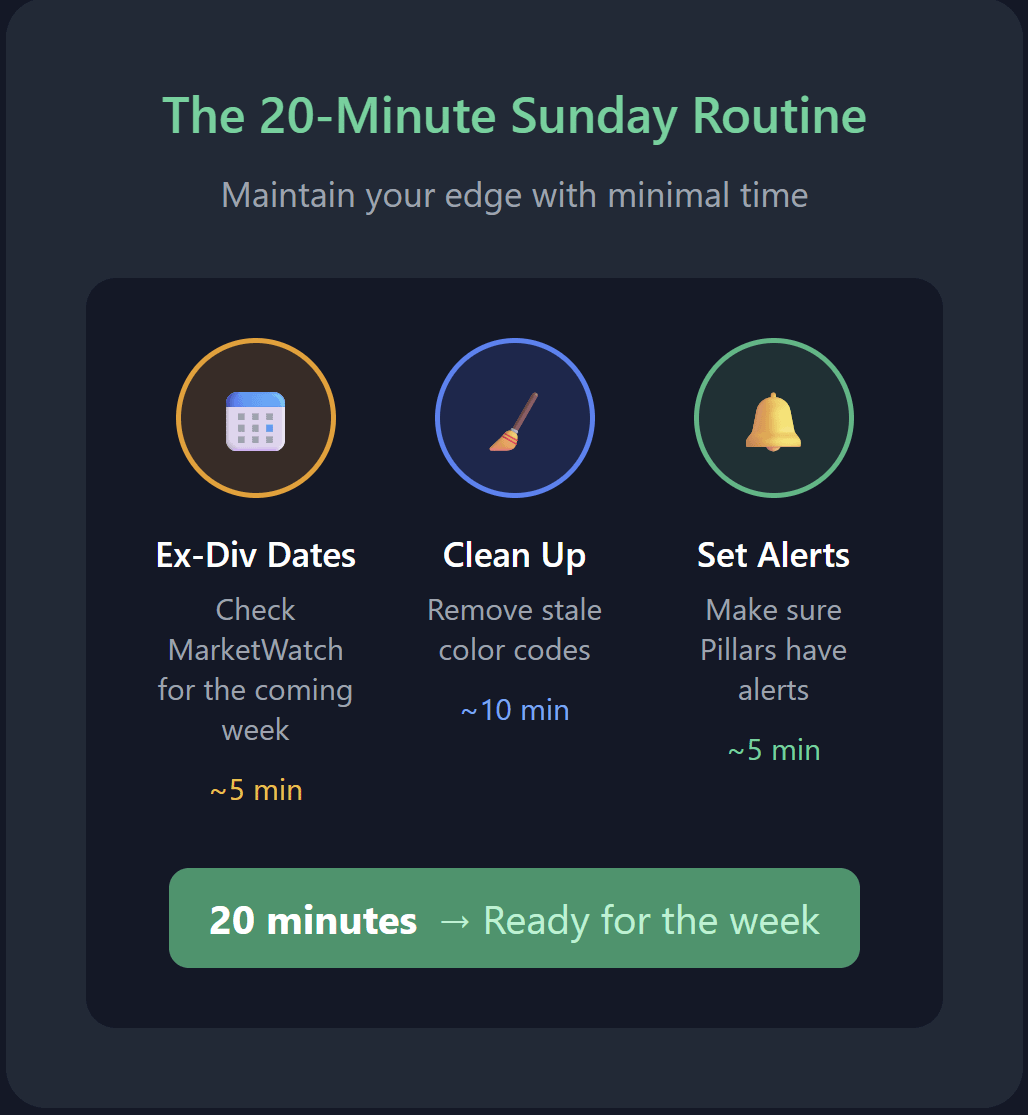
- Check MarketWatch for upcoming ex-dividend dates (filter by dividend, look at the coming week plus the following Monday)
- Review my color-coded lists and clean up anything stale
- Make sure alerts are set on my Pillars list
That’s it. Then during the week, I can scan my lists in minutes and know exactly what deserves my attention.
The Honest Truth
A well-maintained watchlist system is boring. It’s not sexy. Nobody’s going to be impressed when you tell them you spent 20 minutes organizing tickers on Sunday.
But it works.
It’s the difference between trading with intention and trading on impulse. Between finding great setups fast and staring at charts hoping something jumps out.
Simple beats sexy. Every time.
Want Access to My Watchlists?
I share my actual watchlists with Inner Circle members every week.
You’ll see exactly what’s on my radar—the dividend plays, the put-selling candidates, the sideways movers I’m watching for theta. Plus I walk through my thinking so you can build your own system.
Thanks for reading! Subscribe for free to receive new posts and support my work.
Happy trading,
$Maxwell
This is for educational purposes only. I’m not a financial advisor—just a trader who’s been doing this for nearly 30 years. You’re responsible for your own decisions and the buttons you click in your brokerage account.