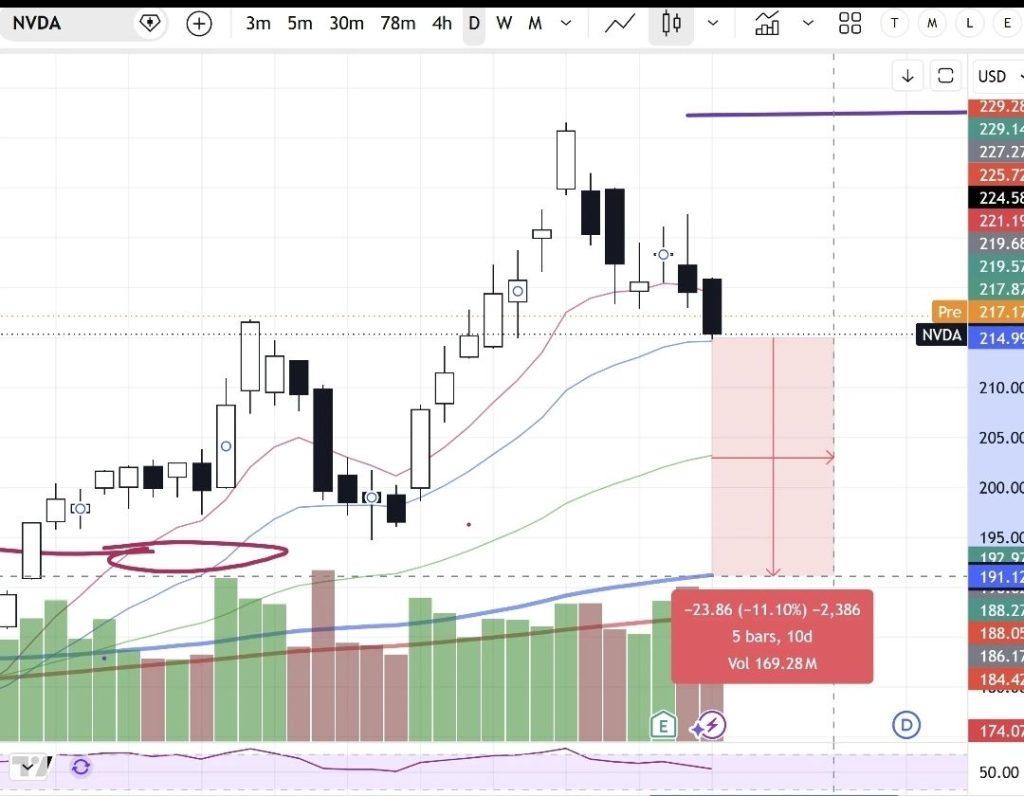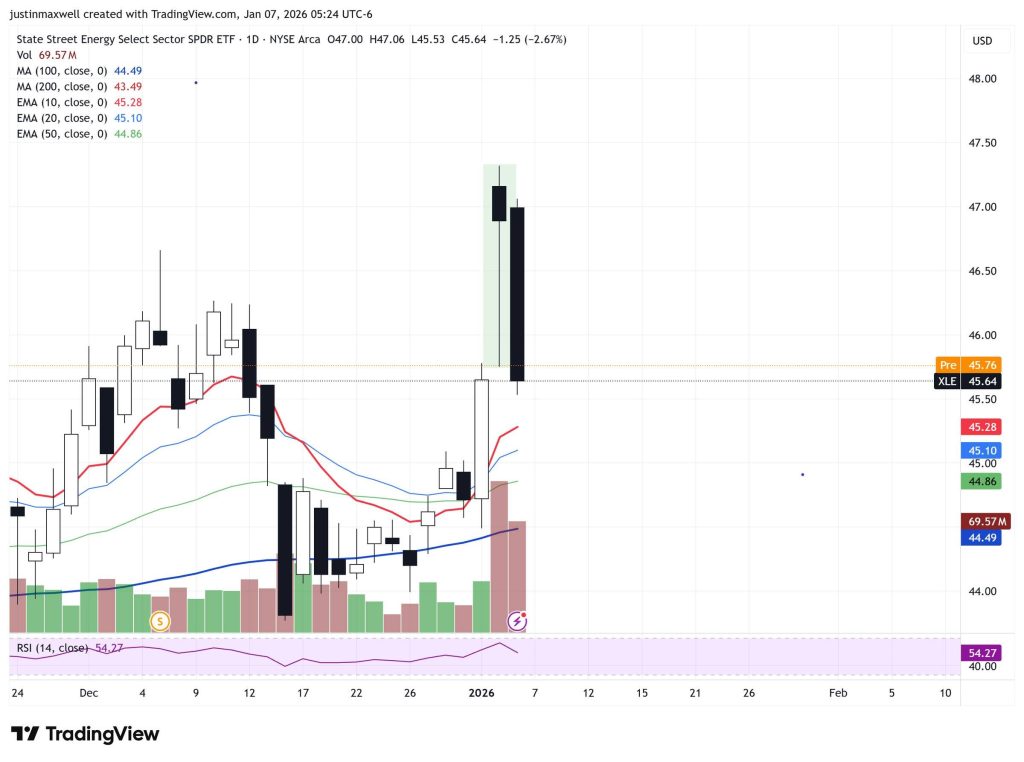
With the SPY, RSP, and QQQ extended from their daily and weekly moving averages, selling naked puts almost feels like picking up pennies in front of a steamroller.
When a stock is hitting resistance or you see a bearish candle pattern, you shouldn’t be 100% bullish. But you don’t have to sit on the sidelines, either. Today, I’m sharing three strategies I use to profit from theta decay while building a “profit tent” in case the market finally dips.
Every Tuesday, I’m posting a Trading Tuesday post to help you navigate the stock market make sure you subscribe:
The $Maxwell Baseline: The Short Put
Before we add layers, let’s look at the standard setup.
- The Goal: 100% bullish.
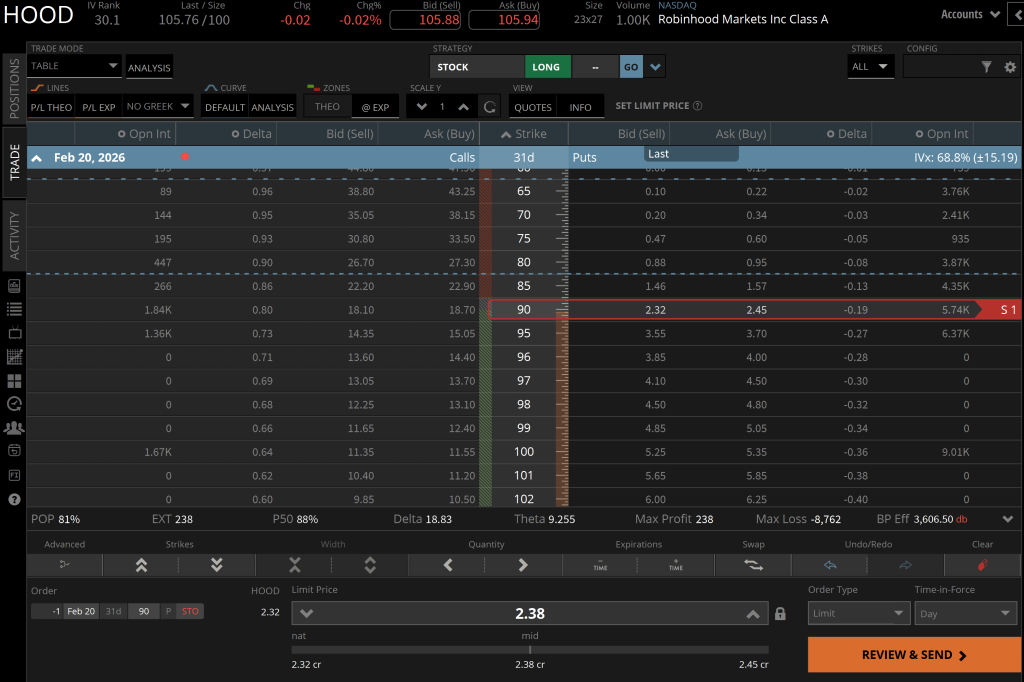
- The Math: Sell outside the expected range (brown bar) around 20 delta (meaning 80% Probability of Profit (POP) Aim for at least 1% of the strike price per 30 days.
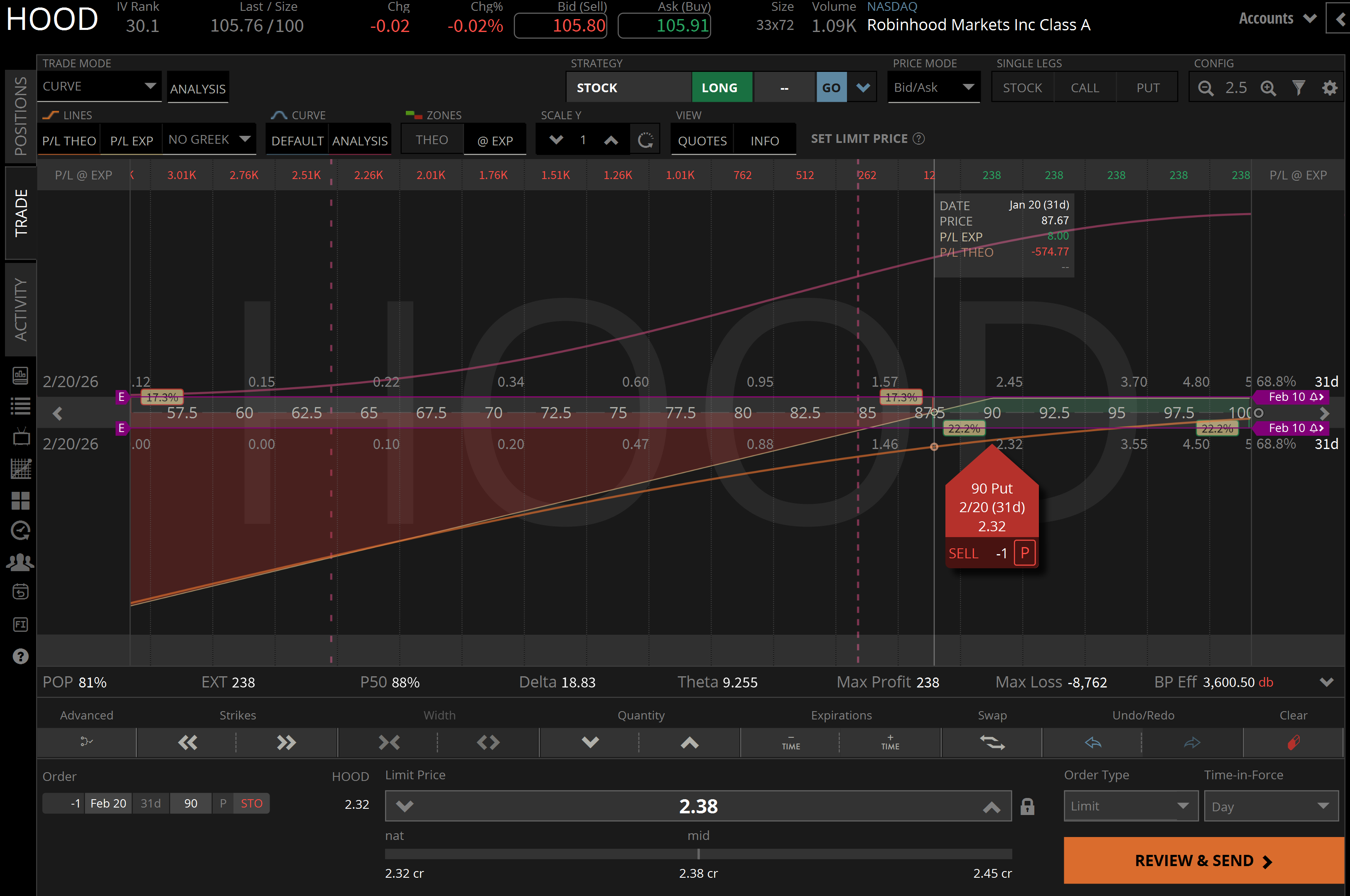
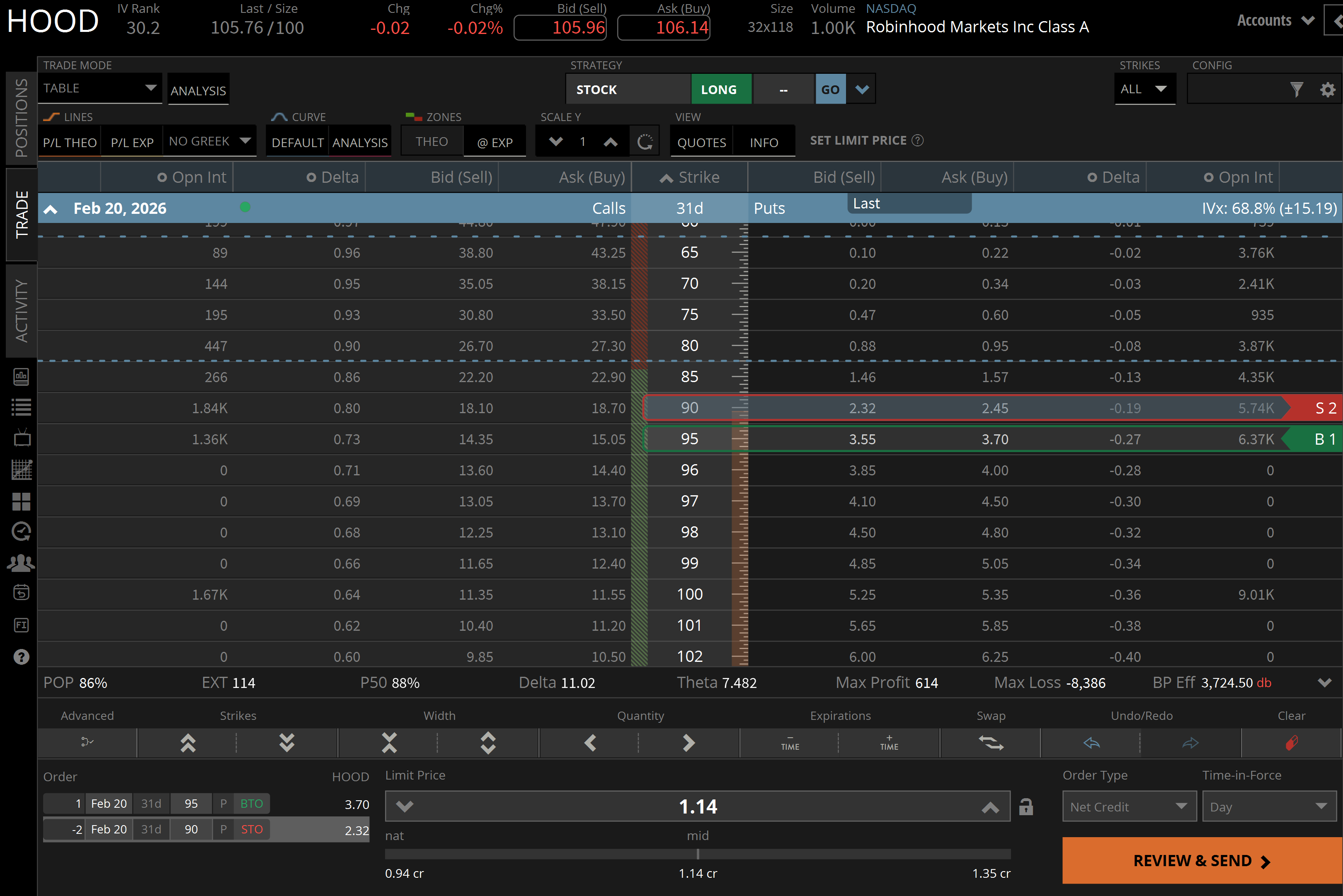
- The Trade: Sell a $90 strike put on HOOD for $2.38
- The Risk: You are obligated to buy 100 shares at the strike price. Max loss is significant if the stock goes down, but owning shares of a quality asset gives you a “second chance” if you’re wrong in the short term.
The risk curve below shows the breakeven with the profit and loss as HOOD shares go up and down:
Strategy 1: The Put Ratio Spread (1:2)
The Ratio Spread is for when you’re bullish but want a “bonus” if the stock pulls back into a specific range.
- The Setup: Buy 1 long put and sell 2 short puts.
- The Trade: Buy the $95 put and sell two $90 puts.
- The Difference: Instead of just a $1.14 credit, you’ve created a “Profit Tent” between $90 and $100.
- The Risk: You are still obligated to buy 100 shares at the short put, but you have an insurance policy with the put spread.
- The Why: If HOOD pulls back into that tent, your max profit jumps significantly because of the embedded debit spread. You’re hedging your short put by layering protection right above it.
Strategy 2: The 1-1-1 Put Spread
What if you’re even more bearish but still want to start a position? The 1-1-1 uses three different strikes to capture a wider pullback range.
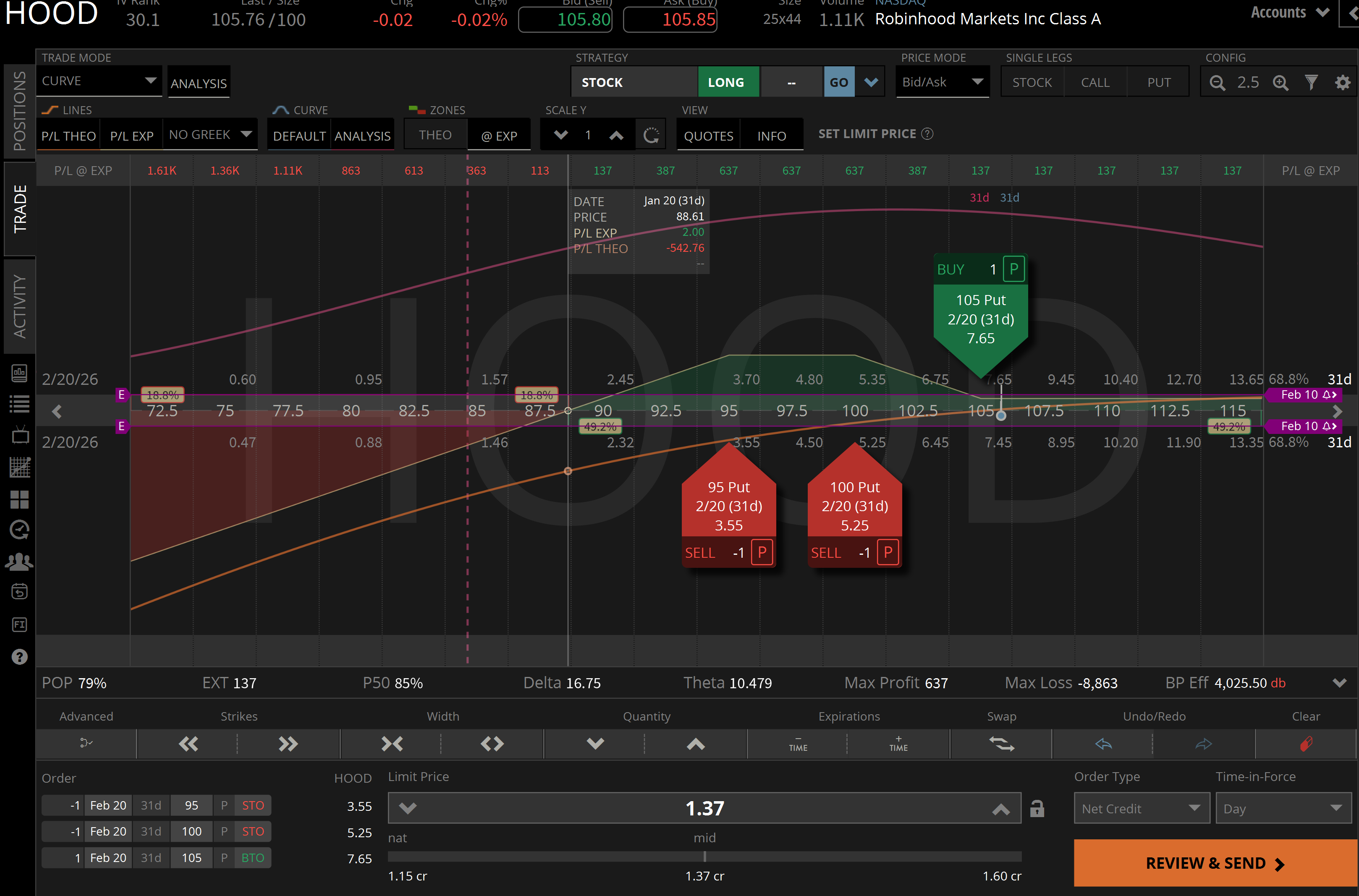
- The Setup: Buy a put debit spread (e.g., 105/100) and sell one “naked” put further out (e.g., $95).
- The Math: I prefer a strike gap between my short puts. This setup ensures you still collect a net credit if the stock bounces, but pays out a “fat” profit if it lands in the tent.
- The Risk: You are obligated to buy 100 shares of stock at the bottom short put, but you have a put spread that will provide you a credit.
- The Why: If the stock drops into the tent, I can often roll this into my favorite advanced trade: the 1-1-2.
Strategy 3: The 1-1-2 Put Spread
The 1-1-2 is the powerhouse for traders comfortable with more size. It doubles the theta decay by selling two puts at the bottom.
- The Setup: 1 Long Put / 1 Short Put (Debit Spread) / 2 Short Puts (Naked).
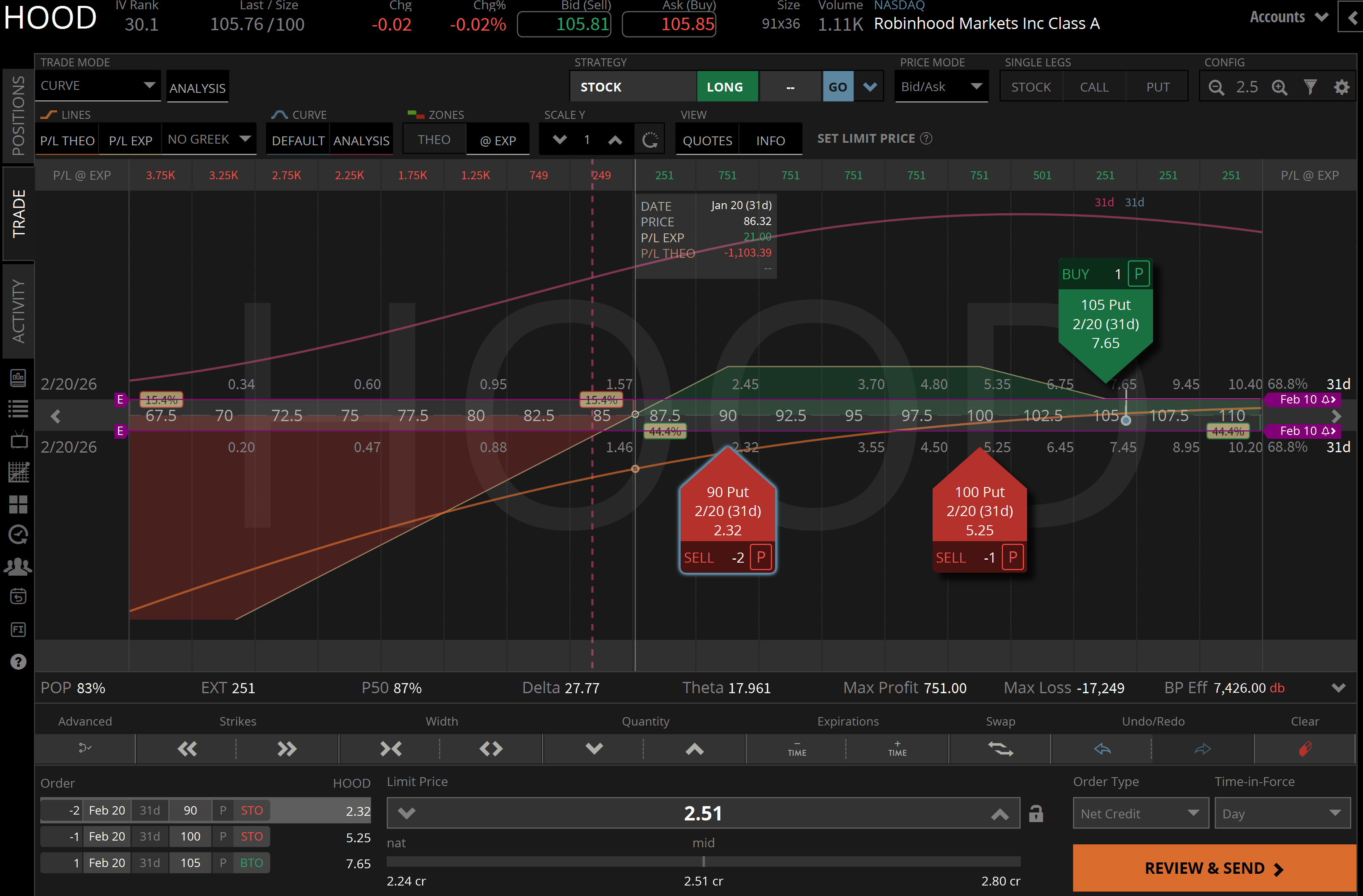
- The Trade: Buy the $110 put, sell the $105 put, and sell two $90 puts.
- The Numbers: This requires more buying power (roughly $1,800 for two shorts), but it offers a massive probability of profit.
- The Risk: You are obligated to buy 200 shares at the lowest strike.
- The Efficiency: Even if the stock goes up, you still benefit from daily theta decay. You’re getting paid to wait for the pullback.
Summary: Which “Tent” fits your bias?
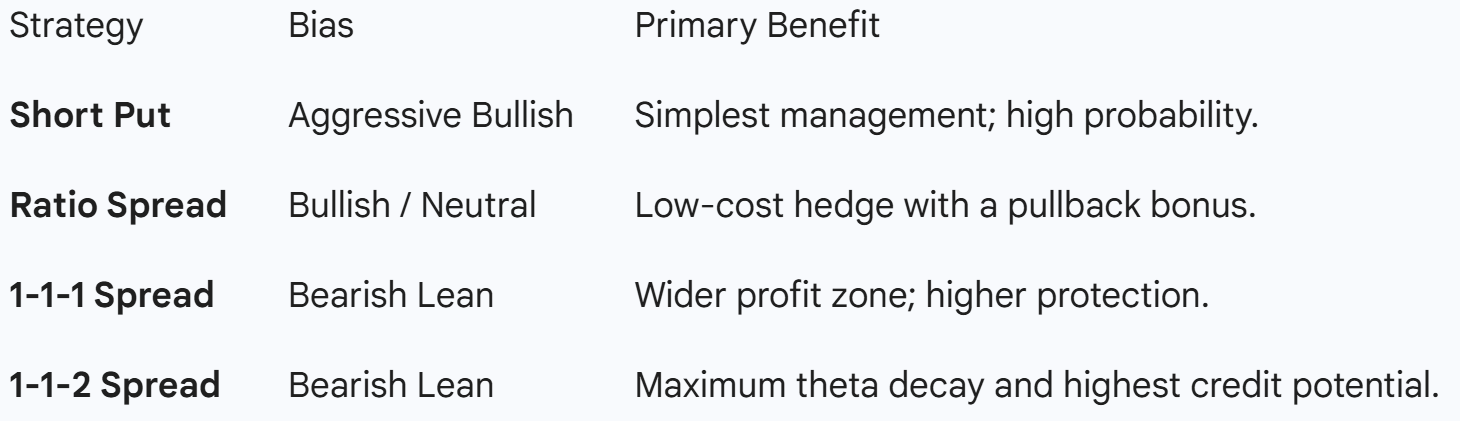
The Bottom Line: Stop selling naked puts into an overextended market. Start building tents.
Thanks for reading! Subscribe for free to receive new posts and support my work.
Turning knowledge into wealth,
$Maxwell
This email is for educational purposes only. I am not a financial advisor, and nothing here should be considered financial or trading advice. I don’t know your financial situation, risk tolerance, or goals.
I’m just a guy on the internet sharing how I think about markets. You are solely responsible for any trades you place and the buttons you click in your brokerage account